7 Best AI Courses for Journalists in 2026: Skills for Real Reporting Work
By Samuel G · · 10 min read
If you need to get up to speed on AI but cannot waste time on theory that never shows up in a newsroom, pick a course that mirrors your actual workflow. The shortest entry points are free introductions from Alison and IBM. For a structured certificate covering transcription, summarisation, and headline drafting, look at Google or IBM Foundations of AI. If you want a plan built around your own beat, Upskili starts from your goal.
Quick comparison
| Course | Provider | Best for | Level | Duration | Certificate | Cost |
|---|---|---|---|---|---|---|
| Artificial Intelligence for Beginners | Alison | A free, quick overview of AI concepts | Beginner | 1.5-3 Hours | CPD-Accredited | Free |
| Personalised learning path | Upskili (publisher of this guide) | A plan built around your reporting goal | Not stated | Not stated | Not stated | Free to approximately $20, depending on AI token/credit usage |
| Introduction to Artificial Intelligence (AI) | IBM | Core AI concepts in one week | Beginner | 1 week at 10 hours a week | Shareable certificate | Check the provider's current pricing. |
| Google AI Professional Certificate | Applying generative AI to workplace tasks | Beginner | Self-paced online | Not stated | Check the provider's current pricing. | |
| Foundations of AI | IBM | AI fundamentals with hands-on labs | Not stated | 3 months | Earn a certificate | Original price: $197 USD; Discounted price: $177.30 |
| IBM AI Developer Professional Certificate | IBM | Building AI-powered apps and chatbots | Beginner | 6 months at 4 hours a week | Shareable certificate | Check the provider's current pricing. |
| Computer Science for Artificial Intelligence | HarvardX | Deep technical AI and programming skills | Beginner | 5 months | Earn a certificate | Original price: $518 USD; Discounted price: $466.20 |
How we chose these courses
We looked for courses that a working journalist could put to use on deadline, not academic surveys of AI. Every detail about each course comes from the provider’s own page, checked on the dates given in each record. We did not take the courses ourselves, and we make no claim of testing, reviews, or ratings.
These are the criteria that shaped the list:
Relevance to daily newsroom tasks. The course must cover skills a reporter actually uses: transcribing and cleaning up audio, verifying claims, analysing document sets, and drafting headline or social copy. A course built entirely around marketing or software development did not make the cut.
No unnecessary prerequisites. Most of these courses assume no coding or statistics background. A journalist should not need to learn Python to get value from AI. Where a course does teach programming, it starts from the beginning and is listed later as a specialisation.
Hands-on practice. Activities, labs, or projects that mirror real reporting workflows matter more than video lectures. Several courses include portfolio projects a journalist could adapt to their own beat.
Clear cost and certificate. Every entry states its cost or directs you to the provider’s current pricing. Where a certificate is offered, we note the type so you can decide if it matters for your newsroom or professional development record.
We ordered the list from the most accessible starting point, a free 1.5-hour introduction, to the most specialised technical certificate.
The 7 best AI courses for journalists, one by one
1. Artificial Intelligence for Beginners (Alison)
Best for: A reporter who wants a free, no-commitment overview of AI before deciding how deep to go.
This is a short, self-paced introduction that covers the historical development of AI, types of AI systems, machine learning classifications, and applications across industries. It is the quickest way to build a basic vocabulary without spending money or blocking out weeks on your calendar.
What you’ll learn:
- The historical development of artificial intelligence
- Types of AI systems and how they differ
- Classifications of machine learning
- Applications of AI in various industries
Worth knowing: The course is broad and does not include hands-on exercises with generative AI tools. It gives you concepts, not practice with transcription or document analysis.
Cost and certificate: Free. A CPD-Accredited certificate is awarded upon completion.
2. Upskili: a personalised path for your goal
Best for: A journalist who wants a learning plan built around their own beat, not a generic syllabus.
Upskili, the platform that publishes this guide, is not a fixed, pre-written course. You state what you want to achieve, for example using AI to speed up FOI document review, and Upskili works out the skills required, teaching them in order and measuring progress by demonstrated capability. It adapts as you learn, so you spend time only on what you need. Build a step-by-step AI plan for your reporting goal.
What you’ll learn:
- Skills matched to your specific goal, such as AI-assisted document analysis or interview summarisation
- A sequence that builds from foundational concepts to applied techniques
- Progress measured by what you can demonstrate, not by time spent
Worth knowing: This is a personalised, AI-powered option, not a course with a fixed syllabus or a shareable certificate. Its cost depends on your usage of AI tokens and credits.
Cost and certificate: Free to approximately $20, depending on AI token/credit usage. Certificate: Not stated.
3. Introduction to Artificial Intelligence (AI) (IBM)
Best for: A journalist who can commit a focused week to understand core AI concepts, including generative AI.
This beginner-level course from IBM runs about ten hours across one week. It covers deep learning, machine learning, neural networks, and generative AI models. For a reporter who needs to talk about AI tools with sources or editors, it builds a solid conceptual foundation.
What you’ll learn:
- Core AI concepts including deep learning and machine learning
- How neural networks function
- An introduction to generative AI models
Worth knowing: The course is conceptual. It does not walk you through using a transcription or summarisation tool on your own interview files. Pair it with hands-on practice if you need immediate workflow changes.
Cost and certificate: Check the provider's current pricing. A shareable certificate is available.
4. Google AI Professional Certificate (Google)
Best for: A journalist who wants a practical, workplace-oriented certificate that includes hands-on generative AI activities.
This program teaches how to use generative AI for tasks such as strategy, boosting creativity, and streamlining repetitive work. It includes more than twenty hands-on activities and a portfolio of AI projects. For a reporter, the emphasis on applying AI to everyday tasks maps well onto drafting, summarising, and idea generation.
What you’ll learn:
- Using generative AI for workplace tasks and strategy
- Techniques to boost creativity with AI
- Streamlining repetitive tasks through AI automation
- Building a portfolio of AI projects through 20+ hands-on activities
Worth knowing: The certificate does not state a fixed duration. Because it is self-paced, you will need to manage your own schedule around deadlines.
Cost and certificate: Check the provider's current pricing. Certificate details are not stated on the provider’s page.
5. Foundations of AI (IBM)
Best for: A journalist who wants a structured, three-month professional certificate with hands-on labs in tools like ChatGPT, Copilot, and Gemini.
This professional certificate covers AI fundamentals, machine learning, deep learning, large language models, neural networks, and prompt engineering. The hands-on labs let you work directly with widely used AI tools. For a reporter, the prompt engineering and large language model sections are especially relevant to getting better summaries and drafts from AI.
What you’ll learn:
- AI fundamentals and machine learning
- Deep learning and neural networks
- How large language models work
- Prompt engineering techniques
- Hands-on labs with ChatGPT, Copilot, and Gemini
Worth knowing: The provider lists a three-month duration. If your news cycle is unpredictable, confirm that the self-paced format gives you enough flexibility before enrolling.
Cost and certificate: Original price: $197 USD; Discounted price: $177.30. You earn a certificate upon completion.
6. IBM AI Developer Professional Certificate (IBM)
Best for: A journalist who wants to go beyond using AI tools and learn to build simple AI-powered applications.
This six-month certificate covers software engineering, AI, generative AI, prompt engineering, HTML, JavaScript, and Python. It includes hands-on labs and projects to build AI-powered chatbots and apps. For a data journalist or someone on an investigative team, these skills open up custom tools for document analysis at scale.
What you’ll learn:
- Software engineering and AI fundamentals
- Generative AI and prompt engineering
- HTML, JavaScript, and Python programming
- Building AI-powered chatbots and applications through hands-on projects
Worth knowing: At six months and four hours a week, this is a significant time commitment. It teaches programming from the ground up, but a reporter should be clear on whether they need to build tools or simply use them.
Cost and certificate: Check the provider's current pricing. A shareable certificate is awarded.
7. Computer Science for Artificial Intelligence (HarvardX)
Best for: A journalist who wants a deep, academic grounding in computer science and AI principles, including programming.
This professional certificate series combines CS50’s Introduction to Computer Science with CS50’s Introduction to Artificial Intelligence with Python. It covers programming fundamentals, graph search algorithms, reinforcement learning, machine learning, and AI principles. It is the most technically rigorous option on this list.
What you’ll learn:
- Programming fundamentals through CS50
- Graph search algorithms and reinforcement learning
- Machine learning and artificial intelligence principles
- Python for AI applications
Worth knowing: This is a serious five-month commitment. The material is excellent, but a reporter should weigh whether the depth in algorithms and programming aligns with their daily work before enrolling.
Cost and certificate: Original price: $518 USD; Discounted price: $466.20. You earn a certificate upon completion.
Which course should you start with?
Match the course to your situation:
- New to AI and short on time. Start with the free Alison course (entry 1) for a quick conceptual overview, or the IBM Introduction to AI (entry 3) if you can block out a focused week.
- Want a structured, workplace-oriented certificate. The Google AI Professional Certificate (entry 4) and IBM Foundations of AI (entry 5) both offer hands-on practice and a credential. Choose Google for a broad generative AI focus, IBM for deeper technical fundamentals and prompt engineering labs.
- Want to practise on your own reporting tasks with a personalised plan. Upskili (entry 2) builds a path from your specific goal, whether that is document analysis, transcription, or headline testing, and adapts as you learn.
- Willing to invest months for deeper technical skills. The IBM AI Developer certificate (entry 6) and HarvardX Computer Science for AI (entry 7) teach programming and tool-building. These suit data journalists and investigative reporters who need custom analysis capabilities.
A learning path for journalists
You do not need to pick just one course. These phases suggest a sequence that builds from concepts to application.
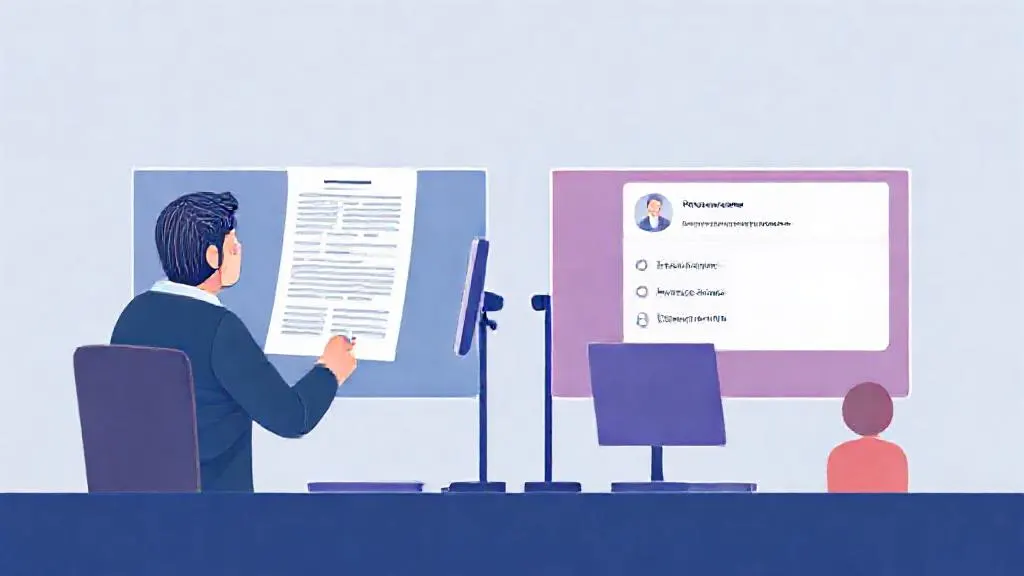
Foundations. Start with the Alison course (entry 1) or IBM Introduction to AI (entry 3) to learn the vocabulary and core concepts. This phase gives you enough grounding to evaluate AI tools and discuss them with colleagues.
Hands-on practice with your own tasks. Next, apply what you know to real reporting workflows. The Google AI Professional Certificate (entry 4) provides structured activities. Upskili (entry 2) personalises this phase to your beat, letting you practise on the document types, interview formats, and deadlines you actually face.
Specialisation. If your work demands custom tools, for example a chatbot that queries a large FOI document set, move to the IBM AI Developer certificate (entry 6) or the HarvardX certificate (entry 7). These teach programming and AI development from the ground up.
Where AI fits in a journalist's work
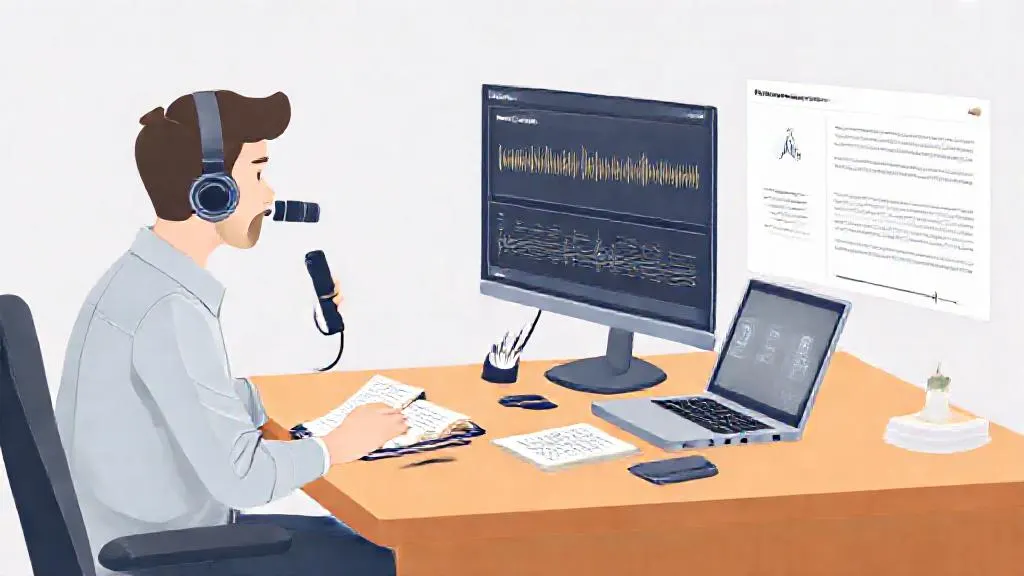
Transcription and interview prep. AI can turn a raw interview recording into a rough transcript and suggest a summary in minutes. But the journalist must still verify every quote against the audio, check the context, and decide what is on the record. The summary is a starting point, not a final draft.
Verification and document analysis. Suppose a reporter obtains a leaked spreadsheet of municipal contracts. They could use techniques from a document-analysis module to extract vendor names, dates, and amounts, then cross-reference each finding with public procurement records and interview the officials involved. Before publication, every AI-generated lead must be reviewed with an editor to confirm accuracy and fairness.
Audience engagement and headline testing. AI can generate multiple headline variants and social copy for different platforms. Editorial judgement still governs which one runs. Legal review, tone, and accuracy to the story are human decisions.
Ethical and legal duty. AI output cannot replace a journalist’s professional judgement or sign-off. Every piece of AI-assisted reporting, whether a transcribed quote, a document summary, or a suggested headline, must be reviewed by a responsible editor before publication. If your work is subject to regulatory or legal standards, the final sign-off rests with a qualified professional, not the tool.
How to decide where to start
Identify your immediate need. If you need to understand what AI can and cannot do before you touch a tool, pick a short introductory course. If you want to apply AI to your beat this week, pick a hands-on certificate or a personalised path that starts from your own reporting goal.
Consider your time and budget. Free, short options exist. Paid certificates require more commitment but provide more structure and a credential. If you want a plan that adapts to your schedule and your specific goal, Upskili builds a personalised AI learning path for journalists starting from what you actually need to do.
Frequently asked questions
Do I need to know how to code?
Not for most of these courses. The Alison, IBM Introduction to AI, Google AI Professional Certificate, and Upskili options require no coding. The IBM AI Developer and HarvardX certificates do teach programming, but they assume no prior experience.
Will AI replace journalists?
No. AI can transcribe interviews, surface patterns in documents, and draft headline variants, but it lacks the judgement, sourcing, and accountability that define journalism. It will change which tasks get automated, making verification and original reporting even more central to the job.
Can I use AI for fact-checking?
You can use it as a first pass to flag claims that need checking, but you cannot rely on it to verify facts. AI models can hallucinate sources and dates. Every fact must still be confirmed against primary documents, public records, or direct human sources, and reviewed by an editor.
Are these courses recognised by newsrooms?
Some are. The Google and IBM professional certificates are widely known in the industry. The Alison course offers a CPD-accredited certificate, which may count toward continuing professional development requirements. No course guarantees a job, but practical, hands-on certificates signal real skill to editors.
How much time do I need to commit?
It ranges from 1.5 hours for the Alison course to six months at four hours a week for the IBM AI Developer certificate. Most self-paced courses let you fit learning around a reporting schedule. Check each provider's current estimated duration before enrolling.
Is there a free option?
Yes. The Alison 'Artificial Intelligence for Beginners' course is completely free and earns a CPD-accredited certificate. The IBM 'Introduction to Artificial Intelligence' course is free to audit on Coursera, though you pay a fee if you want the shareable certificate.
What about ethics and bias in AI?
These issues are fundamental. Some courses, such as the Google AI Professional Certificate, address responsible AI use directly. Regardless of the course, a journalist must apply their own ethical standards: test for bias in AI outputs, attribute AI assistance transparently, and never publish AI-generated content without editorial review.
Can I learn AI without changing my beat?
Absolutely. A personalised path like Upskili starts from your specific goal, say using AI to analyse local government budgets, and teaches only the skills that apply. You do not need to become a data scientist to get practical value from AI on your existing beat.
Turn this into a plan for you
Tell Upskili what you want to be able to do. It works out the skills involved, starts from what you already know, and teaches them in order, adjusting as you go.
Start with your goalSources
- Google AI Professional Certificate, Google
- Foundations of AI, IBM via edX
- IBM AI Developer Professional Certificate, IBM via Coursera
- Computer Science for Artificial Intelligence, HarvardX via edX
- Introduction to Artificial Intelligence (AI), IBM via Coursera