7 Best AI Courses for Writers in 2026: Pick One for Your Real Workflow
By Samuel G · · 10 min read
If you want to use AI for drafting and editing without losing your voice, start with the Google AI Professional Certificate. If you need a quick, free overview first, Alison's 90-minute course gets you there. Writers who want a path built around their own goal, rather than a fixed syllabus, will find Upskili's personalised approach a better fit than any one-size course.
Quick comparison
| Course | Provider | Best for | Level | Duration | Certificate | Cost |
|---|---|---|---|---|---|---|
| Artificial Intelligence for Beginners | Alison | A free, fast AI primer | Beginner | 1.5–3 hours | CPD-Accredited | Free |
| Personalised learning path | Upskili (publisher of this guide) | A path built around your writing goal | Not stated | Not stated | Not stated | Free to approximately $20, depending on AI token/credit usage |
| Google AI Professional Certificate | Hands-on AI for workplace writing tasks | Beginner | Self-paced online | Not stated | Not stated | |
| Foundations of AI | IBM | Prompt engineering and LLM skills | Not stated | 3 months | Earn a certificate | $197 USD; discounted $177.30 |
| IBM AI Developer Professional Certificate | IBM | Building AI-powered apps and chatbots | Beginner | 6 months at 4 hrs/week | Shareable certificate | Not stated |
| Computer Science for Artificial Intelligence | HarvardX | Programming AI tools from scratch | Beginner | 5 months | Earn a certificate | $518 USD; discounted $466.20 |
| Introduction to Artificial Intelligence (AI) | IBM | A one-week AI fundamentals sprint | Beginner | 1 week at 10 hrs/week | Shareable certificate | Not stated |
How we chose these courses
We looked for courses that a working writer could use this month, not a general survey of AI. Four things mattered most.
Relevance to a writer's daily work. The course had to cover tasks you actually do: drafting, editing, researching, summarising, or adapting copy for different audiences. Courses built for engineers or data scientists were left out unless they taught skills a writer could apply directly.
No unnecessary prerequisites. Every course on this list assumes you can write but does not assume you can code, except where the course itself teaches programming from scratch.
Hands-on practice. Watching videos is not enough. We favoured courses that include exercises, labs, or projects where you use AI tools on real text.
A clear cost. You should know what you are paying before you enrol. Where the provider states a price, we include it. Where it does not, we say so.
The list runs from the most accessible starting point to the most specialised. Course details come from each provider's own page, checked on the dates given in the records. We did not take these courses ourselves; this article describes what each provider states it offers.
The 7 best AI courses for writers, one by one
1. Artificial Intelligence for Beginners (Alison)
Best for: A writer who wants a free, no-commitment introduction to AI concepts before investing in a longer course.
This free online course teaches the basics of artificial intelligence in under three hours. It covers the historical development of AI, types of AI systems, machine learning classifications, and how AI is used across industries. It is a vocabulary builder: you come away able to talk about AI with clients and colleagues.
What you'll learn:
- The historical development of artificial intelligence
- Types of AI systems and how they differ
- Machine learning classifications
- Applications of AI in various industries
Worth knowing: This is a conceptual primer. It does not include hands-on exercises with writing tools, so you will need to apply the ideas on your own afterwards.
Cost and certificate: Free. Certificate is CPD-accredited.
2. Upskili: a personalised path for your goal
Best for: A writer who wants a learning path built around their specific goal, like "use AI to speed up drafting and editing without losing my voice", rather than a fixed syllabus.
Upskili, the platform that publishes this guide, does not offer a pre-written course. You state what you want to achieve in your writing work, and it builds a personalised, AI-powered path that teaches the skills you need in order. It adapts as you learn, measuring progress by what you can demonstrate rather than by time spent watching videos. Create a personalised Artificial Intelligence learning path for writers. Upskili costs free to approximately $20, depending on AI token/credit usage.
What you'll learn:
- The AI skills that are directly relevant to your stated writing goal
- How to apply those skills to your own drafts, edits, and research tasks
- A sequence that builds on what you already know, skipping what you do not need
Worth knowing: This is not a fixed course with a set syllabus and a certificate at the end. It suits writers who learn best by working on their own material and want a path that adjusts to them.
Cost and certificate: Free to approximately $20, depending on AI token/credit usage. Certificate: Not stated.
3. Google AI Professional Certificate (Google)
Best for: A writer who wants structured, hands-on practice using generative AI for workplace tasks like strategy, brainstorming, and streamlining repetitive work.
Google's program teaches how to use generative AI in a professional setting. It includes over 20 hands-on activities and ends with a portfolio of AI projects you can show to clients or employers. For a writer, the exercises in strategy and creative thinking translate directly to brainstorming angles, headlines, and outlines.
What you'll learn:
- Using generative AI for workplace strategy and creative tasks
- Streamlining repetitive tasks with AI assistance
- Building a portfolio of AI projects through hands-on activities
Worth knowing: The course is built for a broad professional audience, not writers specifically. You will need to adapt the exercises to your own drafting and editing work.
Cost and certificate: Check the provider's current pricing. Certificate: Not stated.
4. Foundations of AI (IBM)
Best for: A writer who wants to understand how large language models work and get deliberate practice with prompt engineering.
This professional certificate on edX covers AI fundamentals, machine learning, deep learning, large language models, neural networks, and prompt engineering. The hands-on labs use tools like ChatGPT, Copilot, and Gemini, tools you are likely already experimenting with. For a writer, the prompt engineering section is the most immediately useful.
What you'll learn:
- AI fundamentals, machine learning, and deep learning
- How large language models and neural networks work
- Prompt engineering with ChatGPT, Copilot, and Gemini
- Hands-on labs with current AI tools
Worth knowing: At three months, this is a time commitment. The early modules on machine learning theory may feel distant from your daily writing tasks.
Cost and certificate: Original price $197 USD; discounted to $177.30. Earn a certificate.
5. IBM AI Developer Professional Certificate (IBM)
Best for: A writer who wants to build their own AI-powered chatbots, apps, or content tools rather than only use existing ones.
This Coursera professional certificate teaches software engineering, generative AI, prompt engineering, HTML, JavaScript, and Python. You build AI-powered chatbots and apps through hands-on projects. It suits a writer-developer hybrid role, someone who creates interactive content or custom publishing workflows.
What you'll learn:
- Software engineering and AI fundamentals
- Generative AI and prompt engineering
- HTML, JavaScript, and Python programming
- Building AI-powered chatbots and applications
Worth knowing: This is a programming course. If your writing work never touches code, the time investment may be better spent on a course focused on using AI tools rather than building them.
Cost and certificate: Check the provider's current pricing. Shareable certificate.
6. Computer Science for Artificial Intelligence (HarvardX)
Best for: A writer who wants a rigorous, university-level foundation in the programming and algorithms behind AI.
This edX professional certificate combines CS50's Introduction to Computer Science with CS50's Introduction to Artificial Intelligence with Python. It covers programming fundamentals, graph search algorithms, reinforcement learning, machine learning, and AI principles. It is the most academically demanding option on this list.
What you'll learn:
- Programming fundamentals through CS50
- Graph search algorithms and reinforcement learning
- Machine learning principles and practice
- Artificial intelligence concepts with Python
Worth knowing: Five months is a serious commitment, and the material is technical. This is for a writer who plans to build AI tools, not one who wants to use ChatGPT more effectively on tomorrow's deadline.
Cost and certificate: Original price $518 USD; discounted to $466.20. Earn a certificate.
7. Introduction to Artificial Intelligence (AI) (IBM)
Best for: A writer who can dedicate a focused week to understanding AI fundamentals and wants a shareable certificate quickly.
This Coursera course packs core AI concepts into about 10 hours. It covers deep learning, machine learning, neural networks, and generative AI models. It is designed for a broad audience of professionals, enthusiasts, and students, and gives you a structured overview without a long commitment.
What you'll learn:
- Core AI concepts and terminology
- Deep learning and machine learning
- Neural networks and how they function
- Generative AI models
Worth knowing: At one week, the course is an efficient survey. It does not include extended writing-specific exercises, so you will need to practise applying the concepts to your own drafts afterwards.
Cost and certificate: Check the provider's current pricing. Shareable certificate.
Which course should you start with?
Match your situation to the entry that fits.
New to AI and want a free start? Begin with entry 1, Alison's Artificial Intelligence for Beginners. It gives you the vocabulary and concepts in under three hours, and you can decide from there whether to go deeper.
Short on time but want a certificate? Entry 7, IBM's Introduction to Artificial Intelligence, takes about 10 hours over a week and leaves you with a shareable certificate.
Want hands-on practice with your own writing tasks? Entry 3, the Google AI Professional Certificate, includes over 20 activities you can adapt to drafting, editing, and brainstorming. Entry 2, Upskili, builds the whole path around your specific writing goal.
Need a recognised certificate for your profile? Entries 3 (Google), 4 (IBM Foundations), 5 (IBM AI Developer), and 6 (HarvardX) all provide certificates or badges you can add to LinkedIn.
Planning to build your own AI tools? Entries 5 (IBM AI Developer) and 6 (HarvardX) teach programming and application development from the ground up.
A learning path for writers
Here is one way to combine courses into a sequence that builds on each stage.
Phase 1: Foundations. Start with entry 1 (Alison) or entry 7 (IBM Introduction to AI). Both give you the core concepts and vocabulary. Alison is faster and free; IBM's is more structured and comes with a certificate.
Phase 2: Hands-on with your own tasks. Next, apply what you learned to your actual writing. Entry 3 (Google AI Professional Certificate) gives you structured exercises in using AI for workplace tasks. Entry 2 (Upskili) builds a personalised sequence around your goal: drafting faster, editing cleaner, or researching more efficiently.
Phase 3: Specialisation. Choose based on where your work is heading. Entry 4 (IBM Foundations of AI) deepens your prompt engineering skills. Entries 5 (IBM AI Developer) and 6 (HarvardX) take you into building your own tools if your writing work increasingly involves code, interactive content, or custom workflows.
Where AI fits in a writer's work
AI changes several parts of a writer's week. Here is where it helps and where your judgement stays non-negotiable.
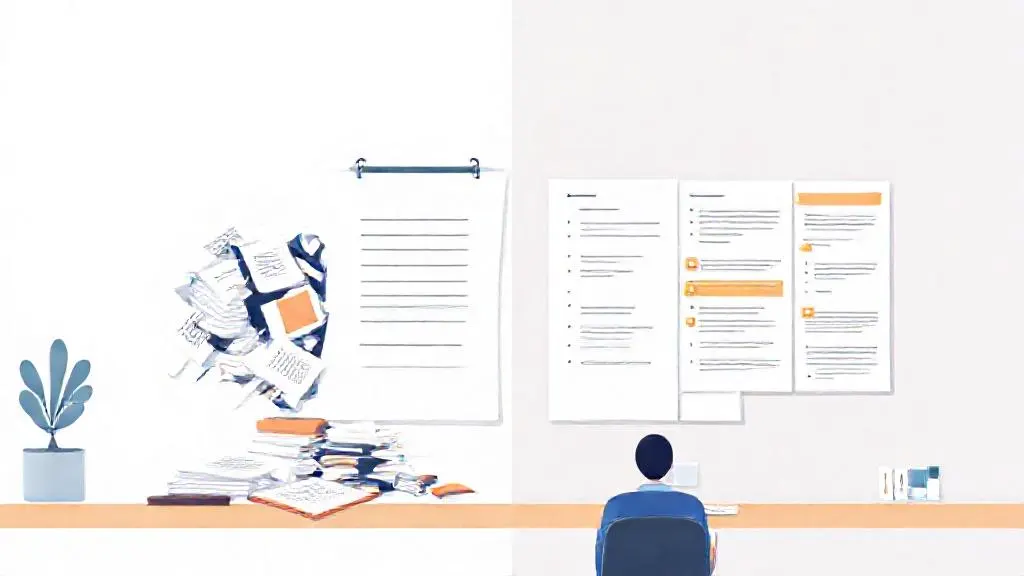
Drafting and outlining. AI can generate a rough outline or a few alternative openings from a brief. You rewrite every sentence in your own voice and structure. For example, suppose a freelance writer has a 1,200-word explainer due in two days and a client who wants a conversational tone. They open their chosen AI course's practice exercise, use a prompt to generate a rough outline and three alternative openings, then rewrite each in their own voice and check every fact against their source notes before sending the draft to the client.
Editing and proofreading. AI can catch inconsistent terminology, passive voice, or sentences that break house style. It cannot judge whether a paragraph lands emotionally or whether the argument holds. That decision stays with you.
Research and fact-checking. AI can summarise a long report or suggest sources to pursue. It can also hallucinate quotes, statistics, and paper titles. Every fact, figure, and direct quote must be verified against the original source before publication.
Client work and adaptation. AI can help reformat a long article into social posts or a newsletter version. You remain responsible for accuracy, tone, and whether the adaptation fits the client's brief. Where your writing carries legal or professional weight, such as financial commentary, medical content, or contract language, AI output must be reviewed by a qualified professional and cannot replace their judgement, standards, or sign-off.
Start with your own goal
The right course is the one that helps with your next assignment, not the one with the most impressive syllabus. If you already know you want to use AI to draft faster without losing your voice, start there. Create a personalised Artificial Intelligence learning path for writers and let the path build around that goal. If you would rather explore the field first, Alison's free primer or Google's hands-on certificate are solid places to begin. Pick one, apply it to a real piece of writing this week, and go from there.
Frequently asked questions
Will AI replace writers?
AI handles some drafting and summarising tasks well, but it cannot replicate your voice, lived experience, or editorial judgement. The parts of writing that depend on taste, empathy, and original thinking still need a person. The courses here teach you to use AI as a tool, not to replace your own skill.
Do I need to know programming to take an AI course for writers?
No. Several courses on this list, including Alison, Google, and the IBM Introduction, assume no coding background. The IBM AI Developer and HarvardX courses do include programming and suit writers who want to build their own applications.
Which course is best if I only have a few hours?
Alison's 'Artificial Intelligence for Beginners' takes 1.5 to 3 hours and gives you a working vocabulary of AI terms and concepts. IBM's 'Introduction to Artificial Intelligence' is about 10 hours over a week and goes deeper into how the models work.
Can I put an AI certificate on my LinkedIn profile?
Yes. Google, IBM, and HarvardX all provide shareable certificates or badges you can add to your profile. Alison's certificate is CPD-accredited. A certificate signals to editors and clients that you have put structured time into learning the tool.
How do I use AI without losing my own voice?
Treat AI output as a starting point, never a final draft. Write your own outlines first, then use AI to suggest alternatives. Rewrite every AI-generated sentence in your own words. Courses like Google's include practice exercises that help you build this habit.
Are free AI courses worth it?
For a broad introduction, yes. Alison's free course gives you the concepts and vocabulary to talk about AI confidently with clients and colleagues. If you want hands-on practice with specific writing tasks, a paid certificate course will give you more structured exercises.
Should writers learn to code AI tools?
Most writers do not need to code. If your work involves building chatbots, interactive content, or custom publishing workflows, the IBM AI Developer or HarvardX certificates give you those skills. For drafting, editing, and research, a non-coding course is enough.
Turn this into a plan for you
Tell Upskili what you want to be able to do. It works out the skills involved, starts from what you already know, and teaches them in order, adjusting as you go.
Start with your goalSources
- Google AI Professional Certificate, Google
- Foundations of AI, IBM on edX
- IBM AI Developer Professional Certificate, IBM on Coursera
- Computer Science for Artificial Intelligence, HarvardX on edX
- Introduction to Artificial Intelligence (AI), IBM on Coursera