7 Best AI Courses for Job Seekers in 2026: Learn AI for Your Current Work
By Samuel G · · 10 min read
The right AI course depends on what you need AI to do in your current job. For a quick, no-code introduction to core concepts, start with the free Alison course. If you want a personalised path built from your specific work goal, Upskili adapts to you. For a recognised certificate with hands-on workplace tasks, Google's programme is the strongest practical choice.
Quick comparison
| Course | Provider | Best for | Level | Duration | Certificate | Cost |
|---|---|---|---|---|---|---|
| Artificial Intelligence for Beginners | Alison | A fast, free introduction | Beginner | 1.5-3 Hours | CPD-Accredited | Free |
| Personalised learning path | Upskili (publisher of this guide) | Learning tailored to your specific work goal | Not stated | Not stated | Not stated | Free to approximately $20, depending on AI token/credit usage |
| Introduction to Artificial Intelligence (AI) | IBM | A short, structured overview of core AI concepts | Beginner | 1 week at 10 hours a week | Shareable certificate | Check the provider's current pricing. |
| Google AI Professional Certificate | Hands-on practice with AI for daily workplace tasks | Beginner | Self-paced online | Not stated | Check the provider's current pricing. | |
| Foundations of AI | IBM | A deeper dive into AI and prompt engineering | Not stated | 3 months | Earn a certificate | Original price: $197 USD; Discounted price: $177.30 |
| IBM AI Developer Professional Certificate | IBM | Building AI-powered apps and chatbots | Beginner | 6 months at 4 hours a week | Shareable certificate | Check the provider's current pricing. |
| Computer Science for Artificial Intelligence | HarvardX | A rigorous, academic foundation in AI and programming | Beginner | 5 months | Earn a certificate | Original price: $518 USD; Discounted price: $466.20 |
How we chose these courses
We looked for courses that help a working professional use AI in their actual job, this year. These were the criteria:
- Relevance to daily work tasks. The course teaches AI for things you do in a normal week: drafting emails, summarising reports, analysing spreadsheet data, researching competitors, or automating repetitive admin.
- No unnecessary prerequisites. Beginner-friendly options that do not assume you can code or have a background in advanced mathematics. You can start where you are.
- Hands-on practice. Courses with labs, projects, or activities where you apply a skill immediately, not just watch lectures.
- A clear cost. Free or a stated price. No courses with hidden fees or where you must contact a sales team to know what you will pay.
- A recognised certificate where it matters. A certificate from a known provider can help in a job search or performance review, though it is not the main reason to learn.
The list is ordered from the most accessible starting point to the most specialised. Course details come from each provider's own page, checked on 2026-09-29. We did not take the courses ourselves.
The 7 best courses, one by one
1. Artificial Intelligence for Beginners (Alison)
Best for: A fast, free introduction to AI concepts without any commitment.
This short Alison course covers the basics: the history of AI, types of AI systems, machine learning classifications, and where AI is used across industries. It is delivered entirely online and self-paced. You can finish it in under three hours.
What you'll learn:
- The historical development of artificial intelligence
- Different types of AI systems and how they are classified
- An introduction to machine learning
- Applications of AI in various industries
Worth knowing: The course is high-level and conceptual. It will not teach you how to use a specific tool like ChatGPT for your own work. It is a starting point for understanding the landscape.
Cost and certificate: The course is free. A CPD-accredited certificate is available from the provider.
2. Upskili: a personalised path for your goal
Best for: A professional who wants a learning path built around what they specifically need AI to do in their job.
Upskili, the platform that publishes this guide, takes a different approach from a traditional, fixed course. You start by stating your goal—for example, "I want to use AI to automate my weekly data reporting and draft client emails faster." Upskili works out the skills you need and builds a personalised, AI-powered learning path. It adapts as you learn, measuring progress by what you can demonstrate. It costs free to approximately $20, depending on AI token/credit usage.
What you'll learn:
- Your path is built from your own goal and current skill level
- Skills are taught in the order you need them
- Progress is measured by demonstrated capability, not just completion
Worth knowing: Upskili is not a pre-written course with a fixed syllabus. It suits someone who knows what they want to achieve and wants a path tailored to that, rather than a one-size-fits-all curriculum.
Cost and certificate: Free to approximately $20, depending on AI token/credit usage. Certificate: Not stated.
3. Introduction to Artificial Intelligence (AI) (IBM)
Best for: A structured, one-week overview of core AI concepts from a major technology company.
This IBM course on Coursera covers deep learning, machine learning, neural networks, and generative AI models. It is designed for a broad audience, including professionals, and requires about ten hours of work over one week. It gives you a solid conceptual foundation without requiring any coding.
What you'll learn:
- Core AI concepts and terminology
- What deep learning and machine learning are
- How neural networks function
- An introduction to generative AI models
Worth knowing: The course is conceptual. It will help you understand what AI can and cannot do, but it does not include hands-on practice with workplace tasks.
Cost and certificate: Check the provider's current pricing. A shareable certificate is available.
4. Google AI Professional Certificate (Google)
Best for: Hands-on practice using generative AI for real workplace tasks like strategy, creativity, and streamlining repetitive work.
Google's programme is built for the working professional. It teaches you to use generative AI for practical, daily tasks and includes more than 20 hands-on activities. You build a portfolio of AI projects as you go. The course is self-paced and beginner-friendly.
What you'll learn:
- Using generative AI for workplace strategy and planning
- Boosting creative tasks with AI tools
- Streamlining repetitive administrative tasks
- Building a portfolio of AI projects through hands-on activities
Worth knowing: The certificate is not a university degree, but it signals practical, job-ready AI skills to an employer. Check the provider's page for the latest details on the certificate itself.
Cost and certificate: Check the provider's current pricing. Certificate: Not stated.
5. Foundations of AI (IBM)
Best for: A deeper professional certificate covering AI fundamentals and prompt engineering with hands-on labs.
This three-month IBM course on edX goes further than the introductory version. It covers machine learning, deep learning, large language models, neural networks, and prompt engineering. You will work in hands-on labs with tools like ChatGPT, Copilot, and Gemini. The stated cost is an original price of $197 USD, with a discounted price of $177.30.
What you'll learn:
- AI fundamentals, machine learning and deep learning
- How large language models and neural networks work
- Practical prompt engineering techniques
- Using ChatGPT, Copilot, and Gemini in hands-on labs
Worth knowing: This is a significant time commitment at three months. It is best for someone who wants a structured, named certificate from IBM and is ready to invest the effort.
Cost and certificate: Original price: $197 USD; Discounted price: $177.30. You earn a certificate.
6. IBM AI Developer Professional Certificate (IBM)
Best for: A professional who wants to move beyond using AI tools and start building AI-powered applications.
This is a technical, six-month programme. It covers software engineering, generative AI, prompt engineering, HTML, JavaScript, and Python. You will build AI-powered chatbots and apps through hands-on projects. It is listed as beginner level, but it expects you to learn programming as part of the curriculum.
What you'll learn:
- Software engineering principles for AI
- Generative AI and prompt engineering in development
- Programming with HTML, JavaScript, and Python
- Building AI-powered chatbots and applications
Worth knowing: This is a developer course. If your goal is to use AI in an office job, courses #4 or #2 will be a more direct fit. Choose this if you intend to build AI tools.
Cost and certificate: Check the provider's current pricing. A shareable certificate is available.
7. Computer Science for Artificial Intelligence (HarvardX)
Best for: A rigorous, academic foundation in computer science and AI from a top university.
This professional certificate series combines Harvard's CS50 introduction to computer science with its CS50 introduction to artificial intelligence using Python. It covers programming fundamentals, graph search algorithms, reinforcement learning, and machine learning principles. The stated cost is an original price of $518 USD, with a discounted price of $466.20.
What you'll learn:
- Programming fundamentals through Harvard's CS50
- Graph search algorithms and reinforcement learning
- Machine learning principles
- Artificial intelligence principles using Python
Worth knowing: This is the most demanding and time-intensive course on the list at five months. The Harvard name carries weight, but the content is academic. It is best for someone who wants a deep, principled understanding, not just practical workplace tips.
Cost and certificate: Original price: $518 USD; Discounted price: $466.20. You earn a certificate.
Which course should you start with?
Your choice depends on your immediate goal and how much time you have.
- New to AI and want a quick, free start: Begin with #1, the Alison course. It gives you the basic vocabulary and landscape in under three hours.
- Short on time but want a structured overview: Choose #3, IBM's one-week Introduction. It is a respected name and a manageable commitment.
- You need a recognised certificate for your CV or review: #4 (Google), #5 (IBM Foundations), #6 (IBM Developer), and #7 (HarvardX) all offer certificates. For most professionals, #4 or #5 are the most practical choices.
- You want to practise on your own work immediately: #2 (Upskili) builds a path from your specific goal. #4 (Google) has 20+ hands-on activities for common workplace tasks.
A learning path for working professionals
You do not need to take all seven courses. Here is a sensible progression if you want to build your skills over time.
- Phase 1: Foundations. Start with #1 (Alison) or #3 (IBM Introduction) to understand what AI is, the key terms, and what it can reasonably do. This stops you from being misled by hype.
- Phase 2: Hands-on practice with your own tasks. Move to #4 (Google) or #2 (Upskili). Apply what you learn to your own emails, reports, and data. This is where the skill becomes useful at work.
- Phase 3: Specialisation. If your role demands deeper technical skill, choose #5 (IBM Foundations) for a strong grounding in prompt engineering and models, #6 (IBM Developer) to build AI tools, or #7 (HarvardX) for a rigorous computer science foundation.
Where AI fits in your work
AI is not one skill for one task. It shows up in different parts of a working week.
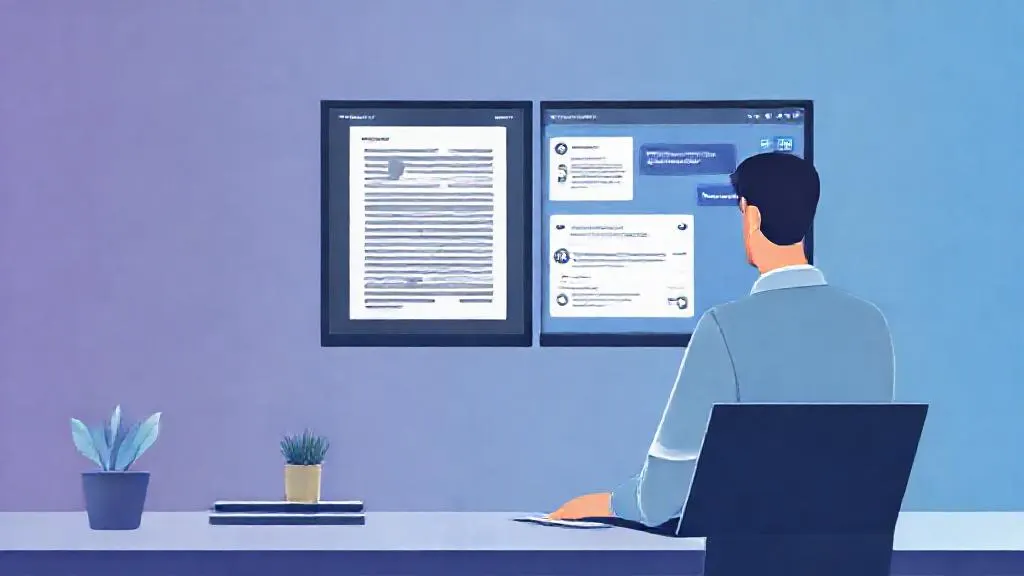
Writing and communication. You draft emails, reports, and presentations. AI can produce a first draft from a few bullet points. For example, you give an AI tool the key points from a client call and ask it to write a follow-up email in your usual tone. You then edit the draft for accuracy and nuance before sending. The thinking and the final sign-off remain yours.
Data analysis. You work with spreadsheets, look for trends, and create charts. AI can take a messy data export, suggest a structure, and write a formula to summarise it. For example, you paste a month of sales data into an AI tool and ask it to identify the top three trends and create a summary paragraph for your manager. You verify the numbers before sharing.
Research. You gather competitor information and stay current on your industry. AI can summarise several long articles or reports into a brief. For example, you need to understand a new regulation. You feed the relevant documents to an AI tool and ask it to list the five points most relevant to your department. You still need to read the source material to confirm the interpretation.
Automation. You handle repetitive admin: data entry, scheduling, or standard responses. AI can suggest a workflow or script to reduce the manual steps. For example, you describe a weekly process of copying data from emails into a tracker. An AI tool can outline a way to automate parts of it, which you then test and adjust.
A note on professional duties: if your work is regulated or carries legal liability—accounting, law, finance, engineering, medicine—AI output is a draft. A qualified professional must review it. AI cannot replace your professional judgement, standards, or sign-off.
How to decide where to start
Be clear about what you want AI to do in your specific job. A course on building chatbots is wasted if you only need to write better reports. Look at your calendar and pick a course that fits the time you can commit. If a certificate helps your case for a promotion or a new role, choose an option that provides one.

The fastest way to learn is to start from your own goal. Create a personalised AI learning path for your work with Upskili, and you will learn exactly what you need, in the order you need it.
Frequently asked questions
Will AI replace my job?
AI is changing how many tasks are done, not replacing entire professions. Tasks like drafting, summarising, and data analysis are being augmented by AI tools. Roles that involve judgement, stakeholder relationships, and complex problem-solving still need a person. Learning to use AI makes you more effective in your current role, not redundant.
Do I need to know how to code to take an AI course?
No. Several courses on this list, including those from Alison, IBM (the 'Introduction' course), and Google, are designed for beginners with no coding background. They focus on using AI tools for everyday work tasks. Courses like the IBM AI Developer certificate and HarvardX do include programming, but they are the more specialised options.
Which AI course has the most recognised certificate?
The Google AI Professional Certificate and the IBM Professional Certificates are widely recognised because they come from major technology companies. The HarvardX certificate carries the weight of a leading university. An Alison CPD-accredited certificate is useful for continuing professional development records, but it is not equivalent to a university or major vendor certificate.
How much time do I need to spend on an AI course?
It varies from under 3 hours for the Alison course to a commitment of 4 hours a week for 6 months for the IBM AI Developer certificate. Most courses are self-paced, so you can fit them around a full-time job. Check each provider's stated duration to find one that matches your schedule.
Are these courses really free?
The Alison course is free to take, and you pay only if you want a certificate. Other courses have a stated cost or offer a free trial period before payment is required. Upskili's cost depends on your AI token usage, ranging from free to approximately $20. Always check the provider's current pricing before enrolling.
Can I use what I learn immediately in my job?
Yes, especially from the more applied courses. The Google certificate includes 20+ hands-on activities for workplace tasks. Upskili builds a path from your specific goal. Even the foundational courses give you a mental model for how AI works, which you can apply the next time you use a tool like ChatGPT or Copilot.
What is the difference between the two IBM courses?
The 'Introduction to Artificial Intelligence' is a short, one-week course covering core concepts at a beginner level. The 'Foundations of AI' is a 3-month professional certificate that goes deeper into machine learning, neural networks, and prompt engineering. The 'AI Developer' certificate is a 6-month technical programme for building AI apps with code.
Is Upskili a replacement for a traditional course?
Upskili is different. Instead of a fixed curriculum written for a broad audience, it creates a personalised, AI-powered path that starts from your stated goal and current skill level. It is a good fit if you want learning tailored to what you specifically need AI to do in your job, rather than a one-size-fits-all syllabus.
Turn this into a plan for you
Tell Upskili what you want to be able to do. It works out the skills involved, starts from what you already know, and teaches them in order, adjusting as you go.
Start with your goalSources
- Google AI Professional Certificate, Google
- Foundations of AI, IBM on edX
- IBM AI Developer Professional Certificate, IBM on Coursera
- Computer Science for Artificial Intelligence, HarvardX on edX
- Introduction to Artificial Intelligence (AI), IBM on Coursera