7 Best Artificial Intelligence Courses for Marketing Managers in 2026
By Samuel G · · 10 min read
If you need a quick, free introduction to AI concepts, start with Alison or IBM's short introductory course. For a recognised certificate and hands-on practice with workplace tasks like drafting briefs and reviewing copy, the Google AI Professional Certificate or IBM Foundations of AI fit most marketing managers. If your goal is specific—say, using AI for audience segmentation—consider a personalised path built around that objective.
Quick comparison
| Course | Provider | Best for | Level | Duration | Certificate | Cost |
|---|---|---|---|---|---|---|
| Google AI Professional Certificate | Hands-on workplace application | Beginner | Self-paced online | Not stated | Check the provider's current pricing | |
| Personalised learning path | Upskili (publisher of this guide) | A path built around your specific goal | Not stated | Not stated | Not stated | Free to approximately $20, depending on AI token/credit usage |
| Foundations of AI | IBM | A structured certificate with labs | Not stated | Self-paced | Earn a certificate | Original price: $197 USD; Discounted price: $177.30 |
| Introduction to Artificial Intelligence (AI) | IBM | A fast, foundational overview | Beginner | Self-paced online | Shareable certificate | Check the provider's current pricing |
| Artificial Intelligence for Beginners | Alison | A free, quick first step | Beginner | Self-paced online | CPD-Accredited | Free |
| IBM AI Developer Professional Certificate | IBM | Building AI-powered apps and chatbots | Beginner | Self-paced online | Shareable certificate | Check the provider's current pricing |
| Computer Science for Artificial Intelligence | HarvardX | A deep technical foundation | Beginner | Self-paced | Earn a certificate | Original price: $518 USD; Discounted price: $466.20 |
How we chose these courses
We selected these seven options for their practical relevance to a marketing manager's week. Every course here meets at least four of these criteria.
- Relevance to daily marketing tasks: The course must teach skills you can apply to campaign briefs, content review, analytics summaries, or agency coordination. A pure theory course would not make the list.
- No unnecessary prerequisites: Every entry is accessible to a working professional who does not code. Where a course teaches programming, it starts from the beginning.
- Hands-on practice: We looked for courses with activities, labs, or projects that let you work on realistic problems, not just watch videos.
- Clear cost and certificate: The provider states its price plainly, and where a certificate is offered, it is named. We have not guessed at prices or credentials.
- Ordered by accessibility: The list moves from the quickest, simplest starting point to the most specialised, technical option.
Course details come from each provider's own page, checked on 29 September 2026. We did not take the courses ourselves, and we do not claim to have tested, reviewed, or rated them.
The 7 best AI courses for marketing managers, one by one
1. Artificial Intelligence for Beginners (Alison)
Best for: A marketing manager who wants a free, quick overview of what AI is before committing to anything longer.
This is a short, self-paced course that covers the basics of artificial intelligence, its history, types of AI systems, and how machine learning is classified. It also touches on applications across different industries. It is the most accessible entry point on this list.
What you'll learn:
- The historical development of artificial intelligence
- Different types of AI systems
- How machine learning is classified
- Common applications of AI in various industries
Worth knowing: The course is under three hours long, so it is an introduction, not a practical workshop. You will understand the concepts but will not build anything or practise on marketing tasks.
Cost and certificate: Free. A CPD-accredited certificate is available.
2. Upskili: a personalised path for your goal
Best for: A marketing manager with a specific outcome in mind—such as using AI to segment audiences or draft campaign angles—who wants a sequence built around that goal, not a generic syllabus.
Upskili, the platform that publishes this guide, is not a fixed course. It builds a personalised, AI-powered learning path from your stated goal, background, interests, and current skill level, then adapts as you learn. You might start by describing what you want to achieve (for example, "use AI to speed up my campaign briefs"). Upskili works out the skills required and teaches them in order, measuring progress by what you can demonstrate.
What you'll learn:
- A path unique to your goal and starting point
- Skills sequenced to build on each other
- Practical application measured by demonstrated capability
Worth knowing: This is not a pre-written curriculum with a fixed syllabus you can review in advance. It suits people who prefer personalised direction over a standard programme.
Cost and certificate: Free to approximately $20, depending on AI token/credit usage. Plan a personalised route into AI for marketing.
3. Introduction to Artificial Intelligence (AI) (IBM)
Best for: A busy manager who needs a credible, structured overview in about a week.
This Coursera course from IBM covers core AI concepts: deep learning, machine learning, neural networks, and generative AI models. It is designed for a broad audience, including professionals and enthusiasts, and fits into a single intensive week. It gives you the vocabulary and mental models to evaluate AI tools and claims.
What you'll learn:
- Core concepts of deep learning and machine learning
- How neural networks function
- An understanding of generative AI models
Worth knowing: The course is an introduction to concepts, not a hands-on workshop for marketing tasks. You will need to connect the ideas to your own campaign work yourself.
Cost and certificate: Check the provider's current pricing. A shareable certificate is included.
4. Google AI Professional Certificate (Google)
Best for: A marketing manager who wants hands-on practice with generative AI for workplace tasks and a portfolio of completed projects.
This programme from Google teaches you to use generative AI for strategy, boosting creativity, and streamlining repetitive tasks. It includes over 20 hands-on activities and builds a portfolio of AI projects. For a marketing manager, the focus on practical workplace application makes it directly relevant to drafting, reviewing, and strategising.
What you'll learn:
- Using generative AI for workplace strategy
- Boosting creativity with AI tools
- Streamlining repetitive tasks
- Building a portfolio of AI projects through 20+ hands-on activities
Worth knowing: Google does not state the duration or the certificate name on the course page. Check the current details before enrolling.
Cost and certificate: Check the provider's current pricing. Certificate details are not stated on the course page.
5. Foundations of AI (IBM)
Best for: A marketing manager who wants a structured professional certificate with hands-on labs using common tools like ChatGPT and Copilot.
This edX professional certificate covers AI fundamentals, machine learning, deep learning, large language models, neural networks, and prompt engineering. Its hands-on labs use tools you are likely already encountering, including ChatGPT, Copilot, and Gemini. The prompt engineering module is particularly useful for someone who briefs creatives or drafts copy.
What you'll learn:
- AI fundamentals and machine learning
- Deep learning and neural networks
- How large language models work
- Prompt engineering techniques
- Hands-on practice with ChatGPT, Copilot, and Gemini
Worth knowing: The course is estimated at three months, but the weekly commitment is not stated. Plan your schedule conservatively.
Cost and certificate: Original price: $197 USD; discounted price: $177.30. You earn a certificate.
6. IBM AI Developer Professional Certificate (IBM)
Best for: A marketing manager who wants to go beyond using AI tools and learn to build simple AI-powered apps and chatbots.
This is a more technical professional certificate covering software engineering, AI, generative AI, prompt engineering, HTML, JavaScript, and Python. You will build AI-powered chatbots and apps through hands-on labs and projects. It is a significant step up in commitment from the other courses.
What you'll learn:
- Software engineering principles
- Generative AI and prompt engineering
- HTML, JavaScript, and Python programming
- Building AI-powered chatbots and applications
Worth knowing: This course requires a six-month commitment at roughly four hours a week. It is a developer-oriented programme, so only choose it if you genuinely want to build things, not just use them.
Cost and certificate: Check the provider's current pricing. A shareable certificate is included.
7. Computer Science for Artificial Intelligence (HarvardX)
Best for: A marketing manager who wants a deep, academic grounding in the computer science behind AI, possibly as a foundation for a technical leadership role.
This professional certificate series combines Harvard's CS50 introduction to computer science with its introduction to artificial intelligence using Python. It covers programming fundamentals, graph search algorithms, reinforcement learning, machine learning, and AI principles. It is the most rigorous and time-intensive option here.
What you'll learn:
- Programming fundamentals
- Graph search algorithms
- Reinforcement learning
- Machine learning principles
- Artificial intelligence principles using Python
Worth knowing: This is a five-month commitment and the most technically demanding course on the list. It is overkill if your goal is simply to use AI tools more effectively in your current marketing workflow.
Cost and certificate: Original price: $518 USD; discounted price: $466.20. You earn a certificate.
Which course should you start with?
Match your situation to the entry that fits best.
- New to AI and want a quick, free start: Begin with entry 1, Alison's Artificial Intelligence for Beginners. It gives you the concepts in under three hours.
- Short on time but want a structured overview: Entry 3, IBM's Introduction to Artificial Intelligence, is designed for about 10 hours of work and carries a shareable certificate.
- Need a recognised certificate with hands-on practice: Entry 4, the Google AI Professional Certificate, or entry 5, IBM's Foundations of AI, both offer practical labs and a credential. Google's focuses on workplace application; IBM's includes prompt engineering with tools you likely use.
- Want a path built around your specific marketing goal: Entry 2, Upskili, starts from what you want to achieve and builds the learning around it.
A learning path for marketing managers
You do not need to take every course. A practical sequence might look like this.
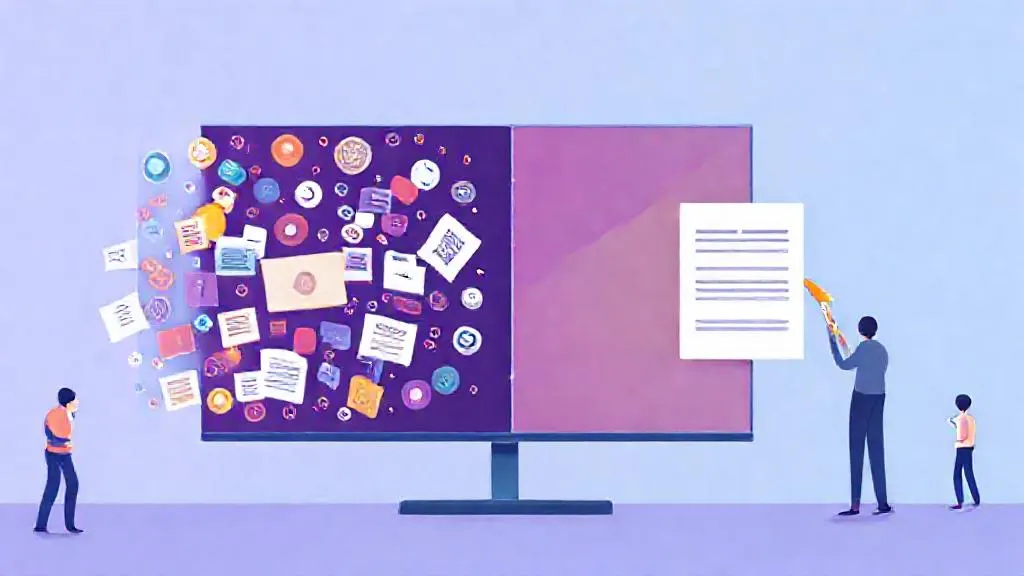
Phase 1: Foundations Start with entry 1 (Alison) or entry 3 (IBM Introduction to AI) to get a working vocabulary. You will learn what generative AI is, how machine learning works, and what the tools can and cannot do. This phase is about being able to evaluate claims and tools intelligently.
Phase 2: Hands-on practice with your own tasks Move to entry 4 (Google AI Professional Certificate) or entry 5 (IBM Foundations of AI). Here you will practise prompt engineering, use AI for strategy and creativity, and build a small portfolio of work. Apply every exercise to a real marketing task. For example, when the course teaches you to generate options, use it to draft subject lines for an upcoming campaign.
Phase 3: Specialisation (optional) If your role demands it, progress to entry 6 (IBM AI Developer) or entry 7 (HarvardX). These are for marketing managers who want to build custom tools, lead technical teams, or move into product-adjacent roles. They are a significant time commitment and not necessary for most marketing leaders.
Where AI fits in a marketing manager's work
Here is where the skills from these courses show up in a typical week.

Campaign planning and briefs You receive a product brief and a set of audience personas. An AI tool can draft three campaign angles and a dozen headline variants in seconds. Your job is to review each against the brand strategy, pick the strongest direction, and refine the language so it sounds like your brand, not a machine. AI output is a first draft, never the final brief.
Content review and brand voice Your team or an agency sends you AI-generated ad copy and landing page text. You use your trained eye to check for off-brand phrasing, factual claims that need verification, and legal risk. AI can suggest edits, but it does not understand nuance, liability, or your audience's unspoken expectations.
Analytics and reporting Instead of pulling numbers manually, you ask an AI tool to summarise last month's campaign performance and highlight anomalies. You then validate the numbers against the raw data, add context about why a channel underperformed, and write the narrative for leadership. The AI does the summarising; you supply the judgement.
Agency and freelancer coordination An agency delivers a set of creative assets. You use AI to compare the deliverables against the original brief and flag gaps. You then apply your professional judgement to decide what needs a revision and what is good to go. AI output must be reviewed by a qualified professional and does not replace their judgement, standards, or sign-off.
How to decide where to start
Pick the course that matches your immediate need. If you need to understand what your agency is talking about, start with a free, short introduction. If your employer wants a credential on file, choose a certificate course with hands-on labs. If you have a specific campaign problem to solve, a personalised path that starts from that problem will be more useful than a generic syllabus.
Begin with one option and apply the first technique you learn to a live task the same week. The courses that stick are the ones you use immediately. If you are unsure, start by describing your goal and current skill level to see a path built for your situation.
Frequently asked questions
Do I need coding skills to take an AI course for marketing?
No, not for most beginner-focused courses. Options like Google's AI Professional Certificate and IBM's Foundations of AI are designed for workplace tasks and do not require programming. More technical courses, such as the IBM AI Developer certificate, will teach you Python, but they are a specialisation, not a starting point.
Will these courses help me manage agencies that use AI?
Yes, indirectly. They will give you a working knowledge of what generative AI can and cannot do reliably. This helps you set clearer briefs, review AI-assisted deliverables against brand guidelines, and ask better questions about methodology, which is more useful than trusting a vendor's claims.
Can AI replace a marketing manager's judgement?
No. AI can draft variants, summarise data, and suggest angles, but it does not understand brand nuance, legal risk, or audience empathy. Every piece of AI-generated work that goes to leadership or the public needs your professional review and sign-off.
Which course is best for a busy marketing manager with little time?
IBM's 'Introduction to Artificial Intelligence (AI)' on Coursera is designed to be completed in about 10 hours, and Alison's 'Artificial Intelligence for Beginners' takes under three hours. Both give a foundational understanding without a long-term commitment.
Are free AI courses enough for my role?
A free course like Alison's is enough to understand the basics and speak the language. If you need to apply AI to your own campaigns and build a portfolio of work, a paid certificate course with hands-on labs, like Google's, will be more practical.
How do I choose between a certificate and a personalised learning path?
Choose a certificate if your employer requires it for a skills benchmark or if you want a structured, pre-built curriculum. Choose a personalised path if your goal is very specific—like using AI for audience segmentation—and you want a sequence of skills built exactly around that, rather than a one-size-fits-all syllabus.
Will AI take over marketing jobs?
It is changing the tasks, not the role. The hours spent on first drafts, data pulls, and basic formatting will shrink. The work of setting strategy, defending creative choices, and judging what fits a brand becomes more important. A marketing manager who can direct AI tools effectively will be more valuable than one who cannot.
How soon can I apply what I learn to my actual marketing work?
Immediately. Most of these courses use common tools like ChatGPT or Gemini. You can take a technique from a lesson and use it the same afternoon to draft a subject line test or summarise last week's campaign numbers for a status update.
Turn this into a plan for you
Tell Upskili what you want to be able to do. It works out the skills involved, starts from what you already know, and teaches them in order, adjusting as you go.
Start with your goalSources
- Google AI Professional Certificate, Google
- Foundations of AI, IBM via edX
- IBM AI Developer Professional Certificate, IBM via Coursera
- Computer Science for Artificial Intelligence, HarvardX via edX
- Introduction to Artificial Intelligence (AI), IBM via Coursera