7 Best Machine Learning Courses for Freelancers in 2026
By Samuel G · · 11 min read
If you need to talk to clients about AI and shape strategy, start with Wharton's AI for Business or Harvard's AI Essentials for Business. If you need to build models and pipelines for client projects, Codecademy's Machine Learning/AI Engineer path or the UT Austin program are the stronger technical fit. If you want a path built around your own freelance goal, Upskili creates a personalised learning sequence that adapts as you learn. Upskili, the platform that publishes this guide, is free to approximately $20, depending on AI token/credit usage.
Quick comparison
| Course | Provider | Best for | Level | Duration | Certificate | Cost |
|---|---|---|---|---|---|---|
| AI for Business | Wharton Executive Education | Freelancers adding AI strategy to client conversations | Not stated | Average 4-6 weeks | CEU Credit Eligible | $850 |
| Upskili: a personalised path for your goal | Upskili (publisher of this guide) | Freelancers who want learning shaped around their specific client goal | Personalised to your level | Not stated | Not stated | Free to approximately $20, depending on AI token/credit usage |
| AI For Business Specialization | University of Pennsylvania (Coursera) | Beginners who want a broad business AI foundation on a flexible schedule | Beginner | 4 weeks at 10 hrs/week | Shareable certificate | Check the provider's current pricing |
| AI Essentials for Business | Harvard Business School Online | Established freelancers who need a credential and strategic AI language | Not stated | 16-24 hrs, 90-day access | Certificate of completion from HBS Online | $1,949 |
| AI Product Management Specialization | Duke University | Freelancers managing AI products or acting as a fractional PM | Beginner | 4 months at 5 hrs/week | Shareable certificate | Check the provider's current pricing |
| Post Graduate Program in AI & ML: Business Applications | McCombs School of Business at UT Austin | Freelancers committing to a deeper, mentored technical program | Not stated | 23 weeks | Certificate of completion and CEUs from Texas McCombs | Check the provider's current pricing |
| Machine Learning/AI Engineer | Codecademy | Freelancers who need to write code and build ML pipelines for clients | Not stated | 50 hours | Certificate of completion available with Pro | Check the provider's current pricing |
How we chose these courses
We looked for courses that help a freelancer do real client work, not just understand theory. Here are the criteria we used.
- Relevance to freelance tasks. The course content must connect to scoping, pricing, building, or explaining machine learning work to a paying client. Courses that only teach abstract algorithms without a business or project context were left out.
- No unnecessary prerequisites. A working freelancer should be able to start without returning to university first. We favoured programs that assume professional experience but not a maths or computer science degree.
- Hands-on practice. Projects, case studies, and pipelines matter more than lectures. A freelancer needs to practise on problems that resemble client work, so we looked for courses with applied assignments.
- Clear cost and recognised certificate. Freelancers often need to show a credential to a client. We noted where a certificate comes from a known institution and where the provider states a price plainly.
- Ordered from most accessible to most specialised. The list starts with courses that need no prior ML knowledge and moves toward deeper technical programs.
Course details come from each provider's own page, checked on 2026-10-09. We did not take the courses ourselves, and we do not claim to have tested, reviewed, or rated them.
The 7 best machine learning courses for freelancers, one by one
1. AI for Business (Wharton Executive Education)
Best for: Freelancers who need to explain AI concepts to clients and incorporate machine learning into a business strategy.
This is a self-paced online program from a well-known business school. It covers the types of machine learning, business applications, AI governance, and risks. The focus is on strategic thinking rather than coding, which suits a freelancer who advises clients on whether and how to use AI.
What you'll learn:
- Types of machine learning and where each applies in a business context
- How to incorporate big data and AI into a client's strategy
- AI governance frameworks and risk management
- Generative AI and its business implications
Worth knowing: The program does not teach you to build models. If a client asks you to write code or train a classifier, you will need additional technical study.
Cost and certificate: $850. CEU Credit Eligible.
2. Upskili: a personalised path for your goal
Best for: Freelancers who want a learning path built around their own client goal rather than a fixed syllabus.
Upskili works differently from a traditional course. You state what you want to achieve—for example, using machine learning to deliver better client projects as a freelancer—and it works out the skills you need, teaching them in order and adapting as you go. It measures progress by demonstrated capability, not time spent watching videos.
What you'll learn:
- The specific skills your goal requires, in the order you need them
- Concepts and techniques mapped to the kind of client work you do
- A path that adjusts as you learn, filling gaps and skipping what you already know
Worth knowing: Upskili does not issue a certificate with an institutional brand name. If your client procurement process requires one, pair this with a course that does.
Cost and certificate: Free to approximately $20, depending on AI token/credit usage. Certificate: Not stated.
3. AI For Business Specialization (University of Pennsylvania, Coursera)
Best for: Freelancers starting from scratch who want a flexible, beginner-friendly overview of AI in business.
This four-course specialization on Coursera covers big data, AI, and machine learning fundamentals. It also addresses ethics, governance, people management, and marketing analytics. Because it assumes no prior experience, it works well if you are new to the field and want a structured introduction you can fit around client deadlines.
What you'll learn:
- Fundamentals of big data, artificial intelligence, and machine learning
- Ethics and risks of AI, plus governance frameworks
- How to apply machine learning concepts to people management
- Marketing strategies using data analytics
Worth knowing: The broad scope means less depth on any single technical skill. You will understand the landscape but will need further study to build a model for a client.
Cost and certificate: Check the provider's current pricing. Shareable certificate upon completion.
4. AI Essentials for Business (Harvard Business School Online)
Best for: Experienced freelancers who want a credential from a top-tier school and the language to lead AI conversations with senior clients.
This on-demand course covers the evolving AI landscape, machine learning, predictive modeling, and data science. It also addresses ethical challenges and how to shape a digital transformation strategy. The HBS case method means you work through real business scenarios, which translates directly to client advisory conversations.
What you'll learn:
- Applications of AI and machine learning in business
- Predictive modeling and data science concepts
- Ethical AI challenges and how to address them with a client
- How to shape an organization's AI and digital transformation strategy
Worth knowing: At $1,949, it is one of the more expensive options. The 90-day access window means you need to plan your study around client work to finish on time.
Cost and certificate: $1,949. Certificate of completion from Harvard Business School Online.
5. AI Product Management Specialization (Duke University)
Best for: Freelancers who act as fractional product managers or lead machine learning projects for clients.
This specialization teaches you how machine learning works, when to apply it, and how to lead a data science process. It also covers designing human-centered AI products with privacy and ethical standards. If your freelance work involves defining what should be built and managing the build, this is a direct fit.
What you'll learn:
- How machine learning works and when it can be applied to a problem
- Applying the data science process to lead machine learning projects
- Designing AI products with privacy and ethical standards
- Human-centered AI design principles
Worth knowing: It assumes you are managing the work, not writing the code. If your freelance contracts require you to be the hands-on builder, you will need a more technical course alongside this one.
Cost and certificate: Check the provider's current pricing. Shareable certificate upon completion.
6. Post Graduate Program in AI & Machine Learning: Business Applications (McCombs School of Business at UT Austin)
Best for: Freelancers ready to commit to a longer, mentored program that covers both technical skills and business application.
Delivered in collaboration with Great Learning, this 23-week online program includes live mentorship sessions and masterclasses. It covers AI and machine learning foundations, generative AI, and agentic AI, with hands-on projects and case studies taught by Texas McCombs faculty and industry practitioners.
What you'll learn:
- AI and machine learning foundations with business context
- Generative AI and agentic AI concepts and applications
- Hands-on projects and case studies you can reference in client proposals
Worth knowing: The 23-week commitment is significant. Make sure your client pipeline can accommodate the weekly schedule before you enrol.
Cost and certificate: Check the provider's current pricing. Certificate of completion and CEUs from Texas McCombs.
7. Machine Learning/AI Engineer (Codecademy)
Best for: Freelancers who write code and need to build, test, and deploy machine learning pipelines for clients.
This is a career path, not a single course. It covers machine learning fundamentals, software engineering for ML, intermediate machine learning, and building pipelines. Projects and quizzes are built in, so you finish with a portfolio of work you can show a client.
What you'll learn:
- Machine learning fundamentals with coding exercises
- Software engineering practices for machine learning projects
- Intermediate machine learning techniques
- Building and deploying machine learning pipelines
Worth knowing: You need to be comfortable with programming before you start. The path does not teach basic Python or software engineering from scratch. A certificate requires the Pro subscription.
Cost and certificate: Check the provider's current pricing. Certificate of completion available with Pro.
Which course should you start with?
If you are new to machine learning and need to talk to clients about it before you build anything, start with #1 AI for Business or #4 AI Essentials for Business. Both give you the vocabulary and strategic framing.
If you are short on time and want a flexible, beginner-friendly foundation, #3 AI For Business Specialization on Coursera fits around an unpredictable freelance schedule.
If a recognised certificate matters for your client proposals, #4 AI Essentials for Business (Harvard), #6 Post Graduate Program (UT Austin), or any of the Coursera specializations give you a credential to name.
If you want to practise on problems that resemble your own client work, #7 Machine Learning/AI Engineer (Codecademy) gives you hands-on coding projects. #2 Upskili builds a path around your specific goal and adapts as you learn.
If you manage AI products rather than build them, #5 AI Product Management Specialization (Duke) is the closest match to your daily work.
A learning path for freelancers
You do not need to take every course. A sensible sequence might look like this.
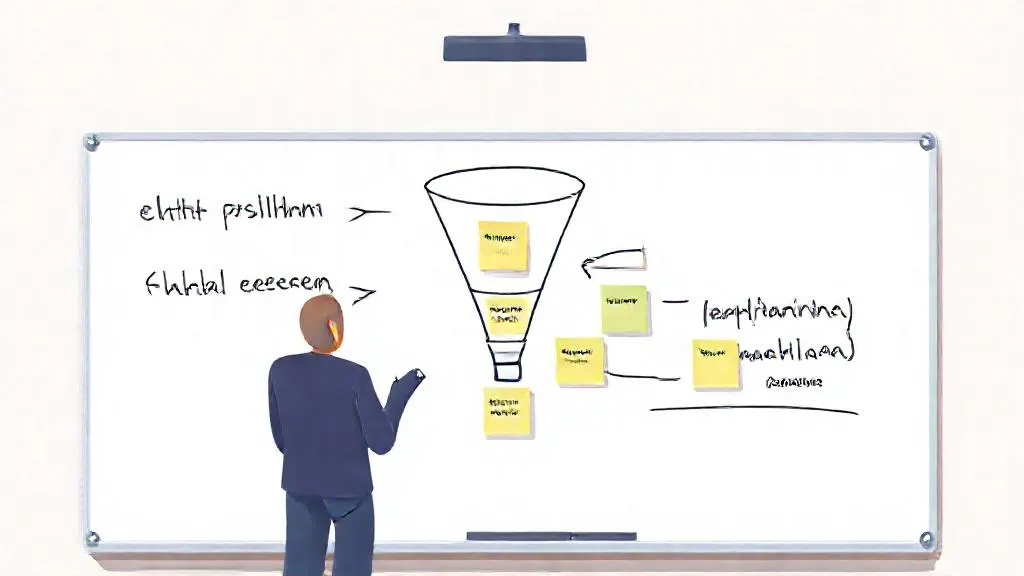
Phase 1: Foundations. Start with a business-focused course to learn the language and concepts. #1 AI for Business, #3 AI For Business Specialization, or #4 AI Essentials for Business all work here. Pick the one that fits your budget and time.
Phase 2: Hands-on practice with your own tasks. Once you understand the concepts, apply them. #7 Machine Learning/AI Engineer (Codecademy) gives you coding practice with projects. Alternatively, #2 Upskili builds a path around your own freelance goal and skips what you already know.
Phase 3: Specialisation. When you have foundations and some practice, go deeper into the area that matches your client work. #5 AI Product Management Specialization (Duke) suits freelancers managing AI builds. #6 Post Graduate Program (UT Austin) offers a comprehensive technical and business program with mentorship.
Where machine learning fits in freelance work
Machine learning shows up in four parts of a freelance engagement, and the right course prepares you for each.

Client discovery and scoping. Before you write a proposal, you need to ask the right questions about data, goals, and feasibility. A business-focused course like Wharton's or Harvard's gives you the framework to assess whether a client's problem is even an ML problem. For example, a freelance consultant is asked by a retail client if AI can predict inventory needs. Instead of saying yes or no, they walk the client through the data requirements, the types of models that could apply, and the limits of prediction given the data the client actually has.
Proposal and pricing. Estimating machine learning work is different from estimating a standard development project. Data cleaning, feature engineering, and model iteration are uncertain. A course with hands-on projects, like Codecademy's or the UT Austin program, helps you break the work into phases and price each one with more confidence.
Delivery and documentation. Clients need to understand what you built and why. A reproducible pipeline and a plain-language explanation of model limitations are part of the deliverable. Suppose a freelance marketing analyst builds a simple lead-scoring model for a small B2B client. They start by reviewing the client's CRM export, identify which fields are complete enough to use, choose a beginner-friendly classification approach from their course, and draft a one-page explanation of how the model works and what it cannot do. They send the draft to the client for review before finalising the deliverable.
Review and sign-off. Any AI output you deliver must be reviewed by you, a qualified professional. Models can produce errors, reflect bias in the training data, or fail on edge cases. Your judgement, documentation, and sign-off are not replaceable by an algorithm. This is true whether you are delivering a predictive model, a clustering analysis, or a generative AI prototype.
How to decide where to start
Match the course to your next client project, not to a vague ambition. If you have a client asking about AI strategy, start with #1 AI for Business or #4 AI Essentials for Business. If a client has asked you to build something, start with #7 Codecademy or #6 UT Austin. If you want a path shaped around your own freelance goal and current skill level, start your own personalised machine learning path on Upskili. The best course is the one you finish because it directly serves the work in front of you.
Frequently asked questions
Do I need a maths or computer science degree to take these courses?
No. Several courses listed, including the Wharton and Coursera specializations, are designed for beginners with no prior experience. The more technical paths, like Codecademy's, assume some programming comfort but not a formal degree. What matters more is your willingness to learn the concepts and apply them to real client problems.
Can I learn machine learning while working full-time as a freelancer?
Yes. Most of these courses are self-paced or have flexible schedules. The Wharton program averages 4-6 weeks, the Coursera specialization expects about 10 hours a week for 4 weeks, and Codecademy's path is 50 hours total. You can study around client deadlines. Choose a course with a duration that fits your current project load.
Will a certificate help me win freelance clients?
It can, particularly if it comes from a recognised institution like Harvard, Wharton, or UT Austin. A certificate signals that you have invested in formal training, which helps when a client is comparing proposals. It is not a substitute for a portfolio of work, but it adds credibility, especially with clients who are new to working with you.
How much should I charge for machine learning work as a freelancer?
There is no single rate. Your pricing should reflect the complexity of the data, the time needed for cleaning and iteration, and the value the model delivers to the client. A simple lead-scoring model for a small business is a different engagement from a custom pipeline for a funded startup. The courses here help you estimate effort more accurately, which leads to better pricing.
What if my client's data is messy or has gaps?
That is the norm, not the exception. Part of your value as a freelancer is assessing data quality early and explaining what is possible with the data available. A course with hands-on practice, like Codecademy's or the UT Austin program, will give you experience with data cleaning and feature engineering so you can have that conversation honestly.
Can I use AI-generated output in a client deliverable without reviewing it?
No. As a professional, you are responsible for the work you deliver. AI output can contain errors, biases, or hallucinations. You must review, test, and document any model or analysis before it reaches a client. Your judgement and sign-off are not replaceable by a tool.
Is Upskili a replacement for a traditional course?
It is a different approach. Traditional courses teach a fixed curriculum designed for a broad audience. Upskili starts with your specific freelance goal and builds a path around what you already know and what you need to learn next. Some freelancers use it as their primary learning tool; others combine it with a structured course for a certificate.
Which course is best if I want to focus on generative AI projects?
The UT Austin Post Graduate Program explicitly covers generative AI and agentic AI as part of its curriculum. The Wharton and Harvard courses also address generative AI within a broader business context. If your client work involves building with large language models, the UT Austin program offers the most depth on the topic among the courses listed.
Turn this into a plan for you
Tell Upskili what you want to be able to do. It works out the skills involved, starts from what you already know, and teaches them in order, adjusting as you go.
Start with your goalSources
- AI for Business, Wharton Executive Education
- AI Essentials for Business, Harvard Business School Online
- AI For Business Specialization, University of Pennsylvania (Coursera)
- Post Graduate Program in AI & Machine Learning: Business Applications, McCombs School of Business at UT Austin
- AI Product Management Specialization, Duke University
- Machine Learning/AI Engineer, Codecademy