7 Best Generative AI Courses for Supply Chain Professionals in 2026
By Samuel G · · 11 min read
If you are new to generative AI and want something you can finish in an afternoon, start with a free beginner course like Generative AI for Everyone or the University of Maryland certificate. If your goal is specific, say, improving a demand forecast or flagging supplier risks, a personalised path adapts to that target. For a recognised certificate or deeper technical work, Johns Hopkins, Udacity, and Google Cloud offer more structured options.
Quick comparison
| Course | Provider | Best for | Level | Duration | Certificate | Cost |
|---|---|---|---|---|---|---|
| Personalised learning path | Upskili (publisher of this guide) | Personalised skill-building for a specific supply chain goal | Not stated | Not stated | Not stated | Free to approximately $20, depending on AI token/credit usage |
| Generative AI for Everyone | DeepLearning.AI | A fast, non-technical introduction | Beginner | 5h1m | Earn a certificate with PRO | Check the provider's current pricing. |
| Free Online Certificate in Artificial Intelligence and Career Empowerment | Robert H. Smith School of Business, University of Maryland | Early to mid-career professionals wanting a free business-school certificate | Not stated | Not stated | Free certificate | Free |
| Explore the business value of generative AI solutions | Microsoft Learn | Business leaders evaluating AI opportunities | Not stated | Not stated | Not stated | Check the provider's current pricing. |
| Applied Generative AI and Agentic AI | Johns Hopkins University | Technology and data professionals seeking a university certificate | Not stated | 16 Weeks Online | Certificate of Completion; 11 CEUs | Check the provider's current pricing. |
| Applied Generative AI Engineering | Udacity | Developers building and deploying GenAI solutions | Intermediate | 56 hours | Program Certificates | Subscription · Monthly |
| Advanced: Generative AI for Developers | Google Cloud (Google Skills) | App Developers, ML Engineers, Data Scientists | Advanced | Not stated | Not stated | Check the provider's current pricing. |
How we chose these courses
We selected these seven options against criteria that matter for a supply chain professional's week:
- Relevance to daily tasks. The course must teach skills you can apply to demand forecasting, supplier risk analysis, logistics planning, S&OP reporting, or procurement analysis, not just general AI theory.
- No unnecessary prerequisites. Several courses require no coding or prior AI knowledge. Where a course does need a technical background, we say so plainly.
- Hands-on practice. The strongest options include exercises or projects where you work with real-like data, not just watch videos.
- Clear cost. We favour courses that state their price upfront or are free, so you can decide without a sales call.
- A recognised certificate where it matters. If a credential helps in your role, for internal advancement or continuing education, we note which courses offer one.
The list runs from the most accessible starting point to the most specialised. Course details come from each provider's own page, checked on 4 October 2026. We did not take the courses ourselves.
The 7 best generative AI courses for supply chain professionals, one by one
1. Generative AI for Everyone (DeepLearning.AI)
Best for: A supply chain professional who wants a fast, non-technical understanding of what generative AI can do, with no coding required.
Taught by Andrew Ng, this beginner course explains how generative AI works, what tools are available, and where it has real business impact. It is self-paced and takes about five hours.
What you'll learn:
- How generative AI works and what it can realistically do
- Common tools and their practical uses
- The broader impact of generative AI on business and society
Worth knowing: This is a broad introduction. It will not walk you through a demand forecast or a supplier risk model. You will need to connect the concepts to your own work yourself.
Cost and certificate: Check the provider's current pricing. A certificate is available with a PRO subscription.
2. Upskili: a personalised path for your goal
Best for: A supply chain professional with a specific goal, like improving demand forecasts or spotting supplier risks, who wants a path built around that target, not a generic syllabus.
Upskili, the platform that publishes this guide, works differently from a traditional course. You state what you want to achieve. Upskili identifies the skills you need, builds a learning path in order, and adapts it as you go. It measures progress by demonstrated capability, not time spent watching videos. It is especially relevant if you want learning personalised to your goal rather than a fixed, pre-written curriculum.
Here is the path Upskili generated for the goal "use AI to improve demand forecasting and supplier risk analysis":
- Get Your Bearings: Explain how AI fits into demand forecasting and supplier risk, and set up the tools you need.
- What AI Can and Can't Do Here
- Set Up Your AI Workspace
- Meet Your Data
- Forecast Demand with AI: Build and evaluate a simple AI forecast, then improve it with extra signals.
- Spot Supplier Risks with AI: Use AI to flag risky suppliers and explain the signals behind the flags.
- Put It Together: Combine demand forecasts and supplier risk into a simple dashboard and communicate findings.
Every learner's path differs. This example shows the structure for one goal.
What you'll learn:
- Where AI fits into demand forecasting and supplier risk workflows
- How to set up an AI workspace and prepare your data
- Building and refining a demand forecast with AI
- Flagging supplier risks and interpreting the signals
- Combining outputs into a dashboard and communicating findings
Worth knowing: Upskili is not a fixed course with a set duration. The time you spend depends on your starting point and how deeply you pursue each stage.
Cost and certificate: Free to approximately $20, depending on AI token/credit usage. Certificate: Not stated.
3. Free Online Certificate in Artificial Intelligence and Career Empowerment (Robert H. Smith School of Business, University of Maryland)
Best for: An early to mid-career supply chain professional who wants a free, business-focused AI overview with a certificate from a recognised business school.
This online program covers an overview of artificial intelligence, how it transforms business functional areas, and career empowerment topics like job searching and consulting. It is designed for professionals who need to understand AI's business implications without getting into code.
What you'll learn:
- An overview of artificial intelligence
- How AI is transforming business functional areas
- Career empowerment topics such as job searching and consulting
Worth knowing: The content is broad and business-oriented. It will not teach you to build a forecast model or analyse supplier data directly. You will need to translate the concepts to supply chain specifics on your own.
Cost and certificate: Free. The provider states it awards a free certificate in "Artificial Intelligence and Career Empowerment" from the Robert H. Smith School of Business at the University of Maryland.
4. Explore the business value of generative AI solutions (Microsoft Learn)
Best for: A supply chain leader or manager who needs to identify high-value AI opportunities, assess readiness, and plan responsible adoption.
This Microsoft Learn path walks business leaders through generative AI concepts, Microsoft Copilot, Azure AI, and intelligent agents. It focuses on identifying opportunities and implementing responsible AI solutions, not on hands-on coding.
What you'll learn:
- Generative AI concepts and their business value
- How to identify high-value generative AI opportunities
- Assessing organisational readiness for AI
- Implementing responsible AI solutions
Worth knowing: The path is built around the Microsoft ecosystem. If your organisation does not use Azure or Copilot, some sections will be less directly applicable.
Cost and certificate: Check the provider's current pricing. Certificate: Not stated.
5. Applied Generative AI and Agentic AI (Johns Hopkins University)
Best for: A supply chain technology or data professional who wants a university certificate and is ready to commit to a 16-week structured program.
This online certificate program covers LLMs, retrieval-augmented generation (RAG), prompt engineering, fine-tuning, agentic workflows, and responsible AI. It is designed for technology and data professionals and includes hands-on projects.
What you'll learn:
- Large language models and retrieval-augmented generation
- Prompt engineering and fine-tuning techniques
- Agentic workflows and their applications
- Responsible AI principles and practice
Worth knowing: This is a significant time commitment at 16 weeks. It assumes you are comfortable with technology concepts, though the provider does not list strict prerequisites.
Cost and certificate: Check the provider's current pricing. The provider states it awards a Certificate of Completion from Johns Hopkins University and 11 CEUs.
6. Applied Generative AI Engineering (Udacity)
Best for: A supply chain professional with a development background who wants to build and deploy custom generative AI solutions, such as a RAG system over procurement documents.
This nanodegree program covers model selection, prompt engineering, parameter-efficient fine-tuning (PEFT), RAG systems, vector databases, and multimodal applications. It is self-paced and estimated at 56 hours of work.
What you'll learn:
- Model selection and prompt engineering
- Parameter-efficient fine-tuning (PEFT)
- Building retrieval-augmented generation (RAG) systems
- Working with vector databases
- Multimodal application development
Worth knowing: This is an intermediate-level program aimed at developers. If you do not have programming experience, start with an introductory course first.
Cost and certificate: Subscription · Monthly. The provider states it awards Program Certificates.
7. Advanced: Generative AI for Developers (Google Cloud)
Best for: A machine learning engineer or data scientist in a supply chain organisation who wants technical depth on the Google Cloud platform.
This learning path from Google Skills includes 12 activities built for app developers, machine learning engineers, and data scientists. The provider recommends completing the Introduction to Generative AI learning path first.
What you'll learn:
- Advanced generative AI techniques on Google Cloud
- Implementation patterns for AI applications
- Technical workflows for development teams
Worth knowing: This is the most technically demanding option on the list. It assumes significant prior knowledge and focuses on the Google Cloud ecosystem.
Cost and certificate: Check the provider's current pricing. Certificate: Not stated.
Which course should you start with?
Match your situation to the right entry:
- New to AI and short on time: Start with Generative AI for Everyone (entry 1) or the University of Maryland free certificate (entry 3). Both give you a working understanding in hours, not weeks.
- You have a specific supply chain goal in mind: Upskili (entry 2) builds a path around your own target, whether that is demand forecasting, supplier risk, or something else.
- You need a certificate for your CV or employer: Johns Hopkins (entry 5) offers a university certificate with CEUs. Udacity (entry 6) provides a program certificate with a technical focus.
- You want to practise on your own data and workflows: Upskili (entry 2) adapts to your goal and data. Udacity (entry 6) includes hands-on projects if you have a development background.
- You are evaluating AI adoption for your team: Microsoft Learn (entry 4) is built for that decision.
A learning path for supply chain professionals
If you are building skills over time, here is a sensible sequence:
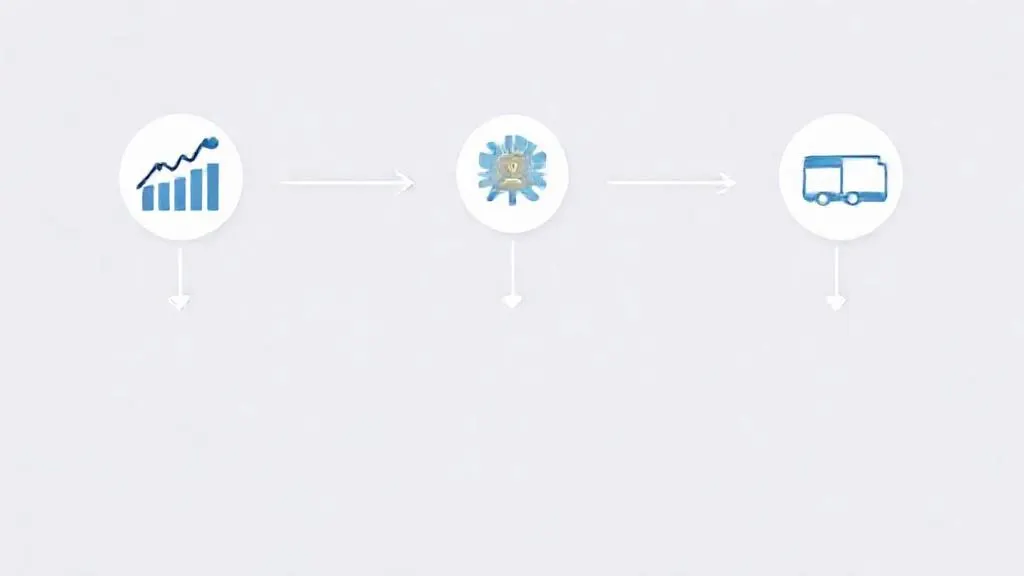
Phase 1: Foundations. Start with Generative AI for Everyone (entry 1) or the University of Maryland certificate (entry 3). Get comfortable with what generative AI is, what it can do, and where it fits in business. This phase takes hours, not weeks.
Phase 2: Hands-on practice with your own tasks. Move to a personalised path through Upskili (entry 2) or, if you have a development background, the Udacity nanodegree (entry 6). Apply what you learn directly to a demand forecast, a supplier risk assessment, or an S&OP draft. Working on your own problem keeps the learning practical.
Phase 3: Specialisation. Depending on your role, go deeper. If you want a university credential, choose Johns Hopkins (entry 5). If you work on a technical team using Google Cloud, take the Google Cloud path (entry 7). If you lead AI adoption decisions, complete the Microsoft Learn path (entry 4).
Where generative AI fits in supply chain work
Generative AI is not one tool for one task. It shows up across a typical supply chain week.

Demand forecasting. You can use generative AI to analyse historical sales, promotions, and seasonality patterns and produce a draft baseline forecast. For example, a supply chain analyst preparing a quarterly forecast might feed last year's sales data and the upcoming promotional calendar into an AI tool. The tool returns a draft forecast with identified risks, which the analyst reviews and adjusts based on knowledge of a competitor's upcoming product launch before presenting it to the S&OP team.
Supplier risk analysis. Generative AI can summarise news, financial filings, and geopolitical signals about key suppliers. For example, a procurement manager might ask an AI tool to review recent news about a critical tier-2 supplier. The tool flags a potential financial stability issue and a logistics disruption in the supplier's region. The manager investigates further and decides whether to activate a contingency plan.
Logistics and inventory planning. When a shipment is delayed or inventory levels mismatch across systems, generative AI can help you explore root causes and suggest alternatives. For example, a logistics coordinator facing a port delay could ask an AI tool to propose alternative routing options based on current inventory levels and customer delivery commitments. The coordinator evaluates the options against cost and service-level agreements before making a decision.
S&OP and executive reporting. Drafting an S&OP summary or an executive update often means reconciling demand, supply, and financial data into a coherent narrative. Generative AI can produce a first draft from your notes and data summaries. For example, after a monthly S&OP meeting, a planner could feed meeting notes and the latest forecast numbers into an AI tool. The tool returns a structured summary that the planner edits for accuracy and tone before circulating it.
AI output in supply chain work must be reviewed by a qualified professional. It does not replace your judgement, your knowledge of the business, or your responsibility for decisions and sign-off.
How to decide where to start
Pick the course that matches your immediate need. If you want a quick, free overview, start with the University of Maryland certificate or Generative AI for Everyone. If you have a specific goal like improving a demand forecast, build a personalised path around that goal with Upskili. If a certificate matters for your next step, look at Johns Hopkins or Udacity.
Start with one course and apply it to a real task this week: a forecast draft, a supplier brief, or an S&OP summary. The fastest way to learn is to use it on your own work.
Frequently asked questions
Will AI replace supply chain professionals?
No. AI is changing the tools, not the profession. It can accelerate tasks like drafting forecasts, summarising supplier news, or generating scenario plans. But a professional must still review the output, apply judgement about market conditions, and sign off on decisions. The skill is shifting toward managing AI-assisted workflows rather than doing everything manually.
Do I need coding skills to use generative AI in supply chain?
Not for many practical applications. You can get useful results from tools like ChatGPT, Copilot, or other generative interfaces without writing code. Courses like Generative AI for Everyone and the UMD certificate require no coding. If you want to build custom models or RAG systems, the Udacity and Google Cloud courses do require programming.
Which course gives the most recognised certificate?
The Applied Generative AI and Agentic AI program from Johns Hopkins University awards a Certificate of Completion and 11 CEUs. The University of Maryland offers a free certificate from its business school. For a technical credential, Udacity's nanodegree program certificate is well known in industry.
How long does it take to learn enough generative AI to use it at work?
You can start applying basic generative AI to tasks like drafting an S&OP summary or analysing supplier news within a few hours. The Generative AI for Everyone course takes about five hours. Deeper technical skills for building custom models take weeks to months, depending on your starting point.
Is the Johns Hopkins certificate worth the cost?
It depends on your goal. The program provides a university certificate, 11 CEUs, and a structured 16-week commitment with hands-on projects. If your employer values formal credentials or you need continuing education units, it can be a good choice. If you just need practical skills quickly, a shorter course may work better.
Can I use generative AI for demand forecasting if my data is messy?
Yes, with caution. Generative AI can help you explore patterns and draft a baseline forecast even from imperfect data. But the output is only as reliable as the input. You must review every forecast against your own knowledge of the business before presenting it. AI output does not replace professional judgement.
Are these courses suitable for procurement professionals too?
Several are. The Microsoft Learn path on business value suits procurement leaders evaluating AI adoption. The University of Maryland certificate covers business functional areas broadly. Upskili can build a path around a procurement-specific goal. The technical courses are more relevant if you work with data engineering teams.
What's the difference between the Google Cloud and Udacity technical courses?
Google's Advanced: Generative AI for Developers is a learning path of 12 activities aimed at developers and data scientists, with a prerequisite introductory path. Udacity's Applied Generative AI Engineering is a 56-hour nanodegree covering model selection, RAG, vector databases, and multimodal applications. Google's is shorter and more focused; Udacity's is broader and includes a program certificate.
Turn this into a plan for you
Tell Upskili what you want to be able to do. It works out the skills involved, starts from what you already know, and teaches them in order, adjusting as you go.
Start with your goalSources
- Generative AI for Everyone, DeepLearning.AI
- Free Online Certificate in Artificial Intelligence and Career Empowerment, Robert H. Smith School of Business, University of Maryland
- Explore the business value of generative AI solutions, Microsoft Learn
- Applied Generative AI and Agentic AI, Johns Hopkins University
- Applied Generative AI Engineering, Udacity
- Advanced: Generative AI for Developers, Google Cloud