7 Best Generative AI Courses for Small Business Owners in 2026
By Samuel G · · 10 min read
If you run a small business, the right generative AI course is the one that solves a problem you have this week. For most owners, start with a short, non-technical primer like DeepLearning.AI's Generative AI for Everyone. If you want a path built around your own goal—such as cutting time on marketing and admin—a personalised option like Upskili fits immediately. For a formal credential, Johns Hopkins offers a 16-week certificate.
Quick comparison
| Course | Provider | Best for | Level | Duration | Certificate | Cost |
|---|---|---|---|---|---|---|
| Generative AI for Everyone | DeepLearning.AI | Absolute beginners | Beginner | 5h1m | Earn a certificate with PRO | Check the provider's current pricing. |
| Personalised learning path | Upskili (publisher of this guide) | Owners who want a path built around their goal | Not stated | Not stated | Not stated | Free to approximately $20, depending on AI token/credit usage |
| Explore the business value of generative AI solutions | Microsoft Learn | Business leaders evaluating AI | Not stated | Self-paced online | Not stated | Check the provider's current pricing. |
| Free Online Certificate in Artificial Intelligence and Career Empowerment | Robert H. Smith School of Business, University of Maryland | Early to mid-career professionals seeking a free certificate | Not stated | Online | Free certificate | Free |
| Applied Generative AI Engineering | Udacity | Developers building GenAI solutions | Intermediate | 56 hours | Program Certificates | Subscription · Monthly |
| Applied Generative AI and Agentic AI | Johns Hopkins University | Technology and data professionals | Not stated | 16 Weeks Online | Certificate of Completion; 11 CEUs | Check the provider's current pricing. |
| Advanced: Generative AI for Developers | Google Cloud (Google Skills) | App Developers, ML Engineers, Data Scientists | Advanced | Not stated | Not stated | Check the provider's current pricing. |

How we chose these courses
We looked for courses that a small business owner could use on Monday morning, not after a semester of theory. Each course on this list was selected against five criteria:
- Relevance to daily tasks: The content must connect to real work—drafting marketing emails, writing SOPs, analysing customer feedback, or forecasting cash flow.
- No unnecessary prerequisites: A course should not require a computer science degree. Where a course expects prior knowledge, we state it clearly.
- Hands-on practice: The best learning happens when you work with your own business content, not abstract examples.
- Clear cost: Upfront pricing or a genuine free option. No hidden fees discovered at checkout.
- Recognised certificate (where it matters): A certificate adds credibility if you pitch to corporate clients or need to demonstrate competence. Not every owner needs one.
The list is ordered from the most accessible starting point to the most specialised. Course details come from each provider's own page, checked on 2026-10-04. We did not take the courses ourselves.
The 7 best generative AI courses for small business owners, one by one
1. Generative AI for Everyone (DeepLearning.AI)
Best for: Owners with no prior AI knowledge who want a quick, clear overview.
This beginner course by Andrew Ng explains how generative AI works, what tools are available, and how the technology affects business and society. It requires no coding and is self-paced, so you can fit it around a busy week. The total content runs about five hours. Generative AI for Everyone
What you'll learn:
- How generative AI works and what it can realistically do
- Common tools and their real-world applications
- The impact of generative AI on business and society
- How to think about AI projects without technical jargon
Worth knowing: The certificate requires a PRO subscription. The course is a broad primer, not a deep dive into any single business function.
Cost and certificate: Check the provider's current pricing. Earn a certificate with PRO.
2. Upskili: a personalised path for your goal (Upskili)
Best for: Owners who want learning built around their specific business goal, not a generic syllabus.
Upskili, the platform that publishes this guide, does not offer a fixed course. You state a goal, and it builds a personalised, AI-powered learning path that adapts as you learn. Traditional courses are prepared in advance for a broad audience; Upskili starts from your own objective and current skill level. It costs free to approximately $20, depending on AI token/credit usage.
Here is the path Upskili generated for the goal "use AI to save time on marketing and admin tasks":
AI for Marketing & Admin: Save Time Every Day
- Get Started with AI
- What AI Can (and Can't) Do for You
- Pick Your AI Assistant
- Set Up and Have Your First Chat
- Write Better Prompts
- Speed Up Marketing Content
- Automate Admin Tasks
Every learner's path differs. This example shows the kind of practical, sequenced steps the platform builds.
What you'll learn:
- Choosing and setting up an AI assistant for your business
- Crafting prompts that produce usable marketing and admin output
- Drafting and polishing marketing content quickly
- Automating repetitive admin work like scheduling and email triage
Worth knowing: This is not a pre-written course with a fixed syllabus. The experience depends on the goal you set and how you engage with the path.
Cost and certificate: Free to approximately $20, depending on AI token/credit usage. Not stated.
3. Explore the business value of generative AI solutions (Microsoft Learn)
Best for: Owners evaluating where AI fits in their business before investing in tools.
This learning path is written for business leaders. It covers identifying high-value generative AI opportunities, assessing your organisation's readiness, and implementing responsible AI. The modules include concepts, Microsoft Copilot, Azure AI, and intelligent agents. It is self-paced and online. Explore the business value of generative AI solutions
What you'll learn:
- Generative AI concepts for business decision-makers
- How to identify high-value AI opportunities in your operations
- Assessing readiness and planning responsible AI implementation
- An overview of Microsoft Copilot and Azure AI capabilities
Worth knowing: The content is naturally oriented toward the Microsoft ecosystem. If you use other tools, the strategic principles still apply, but the product examples are Microsoft-specific.
Cost and certificate: Check the provider's current pricing. Not stated.
4. Free Online Certificate in Artificial Intelligence and Career Empowerment (Robert H. Smith School of Business, University of Maryland)
Best for: Early to mid-career owners who want a free, university-branded certificate.
This online program from a respected business school covers an overview of artificial intelligence, how it transforms business functions, and career empowerment topics like job searching and consulting. It carries no cost and awards a free certificate upon completion. Free Online Certificate in Artificial Intelligence and Career Empowerment
What you'll learn:
- An overview of artificial intelligence and its business applications
- How AI transforms functional areas like marketing, operations, and finance
- Career empowerment strategies, including job searching and consulting
Worth knowing: The course is designed for a broad professional audience, not small business owners specifically. The career empowerment topics may be less relevant if you are firmly established in your own business.
Cost and certificate: Free. Free certificate in "Artificial Intelligence and Career Empowerment" from the Robert H. Smith School of Business at the University of Maryland.
5. Applied Generative AI Engineering (Udacity)
Best for: Owners with a development background who want to build and deploy AI solutions.
This intermediate nanodegree program covers model selection, prompt engineering, PEFT, RAG systems, vector databases, and multimodal applications. It is aimed at developers and expects prior programming experience. The self-paced format runs approximately 56 hours. Applied Generative AI Engineering
What you'll learn:
- Building and deploying generative AI solutions
- Model selection and prompt engineering techniques
- Working with RAG systems and vector databases
- Multimodal applications
Worth knowing: This is a technical course for people who write code. If you do not have a development background, start with one of the earlier entries on this list.
Cost and certificate: Subscription · Monthly. Program Certificates.
6. Applied Generative AI and Agentic AI (Johns Hopkins University)
Best for: Technology and data professionals who want a structured, in-depth certificate from a top university.
This 16-week online program covers LLMs, RAG, GenAI, prompt engineering, fine-tuning, agentic workflows, and responsible AI. It is built around hands-on projects and awards a Certificate of Completion plus 11 CEUs. The format is online and cohort-based. Applied Generative AI and Agentic AI
What you'll learn:
- Large language models and retrieval-augmented generation
- Prompt engineering and fine-tuning techniques
- Agentic workflows and responsible AI practices
- Hands-on projects applying concepts to real scenarios
Worth knowing: The 16-week commitment is significant for a busy owner. The program is designed for technology and data professionals, so it assumes a level of technical comfort beyond the beginner courses.
Cost and certificate: Check the provider's current pricing. Certificate of Completion from Johns Hopkins University; 11 CEUs.
7. Advanced: Generative AI for Developers (Google Cloud)
Best for: App developers, machine learning engineers, and data scientists pursuing a technical specialisation.
This advanced learning path includes 12 activities and is built for technical roles. Google recommends completing the Introduction to Generative AI learning path first. The content is delivered through Google Skills. Advanced: Generative AI for Developers
What you'll learn:
- A technical generative AI learning path with 12 activities
- Advanced concepts for developers and data scientists
- Practical skills for building with Google Cloud AI tools
Worth knowing: This is the most specialised course on the list. It is not suitable for owners without a strong technical background, and it presumes prior AI knowledge.
Cost and certificate: Check the provider's current pricing. Not stated.
Which course should you start with?
Your choice depends on where you are now and what you need first.
- New to generative AI: Start with #1 Generative AI for Everyone. It gives you a solid mental model in about five hours.
- Short on time and want the business case: #3 Microsoft Learn is self-paced and focused on identifying opportunities, not theory.
- Need a certificate for credibility: #4 University of Maryland is free and from a recognised business school. For a deeper, technical credential, #6 Johns Hopkins offers a 16-week program.
- Want to practise on your own business tasks immediately: #2 Upskili builds a path around your specific goal. #5 Udacity suits those with a development background who want to build solutions.
- Pursuing a structured, advanced technical path: #7 Google Cloud is the most specialised option for experienced developers.
A learning path for small business owners
You do not need to pick just one course. Here is a phased approach that builds practical skill over time.
Phase 1: Foundations. Start with #1 Generative AI for Everyone or #3 Microsoft Learn. Both are accessible and give you the vocabulary and framework to evaluate AI tools for your business.
Phase 2: Hands-on practice with your own tasks. Move to #2 Upskili and set a goal tied to your biggest time drain, such as drafting marketing content or automating admin. If you have a technical background, #5 Udacity lets you build and deploy solutions.
Phase 3: Specialisation or certification. If your business serves corporate clients or a regulated industry, a certificate from #4 University of Maryland or #6 Johns Hopkins adds formal weight. For the technically ambitious, #7 Google Cloud deepens your development skills.
Where generative AI fits in a small business owner's work
Generative AI is not one tool for one task. It shows up across your week in practical, repeatable ways.
Marketing and content creation. Drafting emails, social posts, and blog outlines. For example, suppose you need a series of welcome emails for new customers. You can prompt an AI tool to draft three variations in your brand voice, then edit them for personal touches before scheduling.
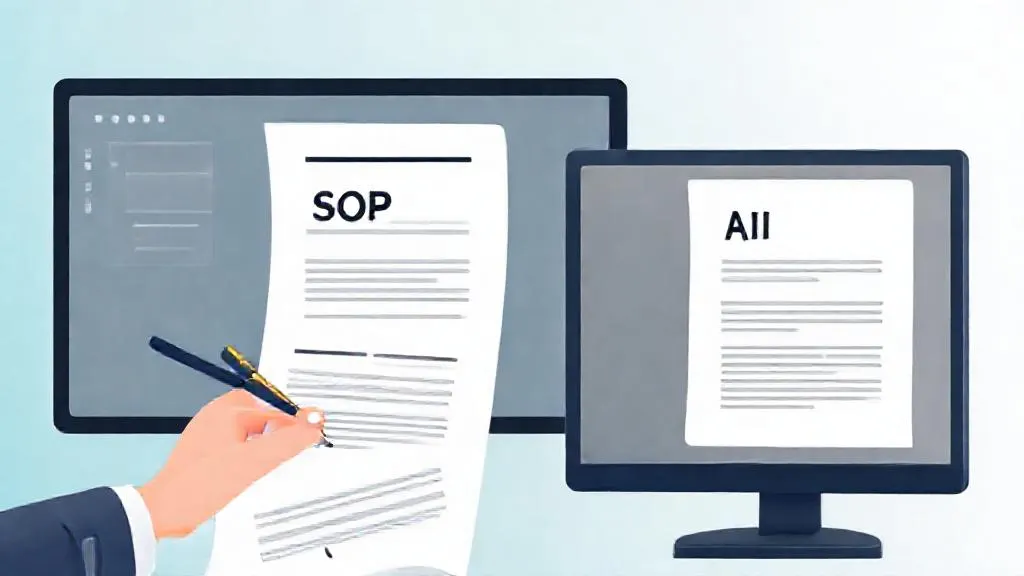
Operations and admin. Writing SOPs, summarising meeting notes, and automating repetitive tasks. For example, you record a voice memo describing a new process. An AI tool transcribes it and produces a first-draft SOP that you refine and share with your team.
Customer service. Drafting responses to common inquiries, analysing feedback, and creating FAQ documents. For example, you copy a week's worth of customer emails into an AI tool and ask it to identify the three most frequent complaints and draft template responses for each.
Finance and planning. Generating cash flow scenarios, summarising invoices, and preparing simple reports. For example, you describe your current revenue streams and seasonal patterns to an AI tool, and it suggests a few cash flow forecast scenarios for the next quarter.
AI output must be reviewed by you or a qualified professional. It does not replace your judgement, your legal responsibilities, or the professional standards your business must meet.
How to decide where to start
Pick the course that matches your most pressing problem. If marketing content eats your Sunday afternoons, start there. If you cannot get a clear read on your numbers, start with finance tasks.
Consider how you learn best. Self-paced video courses suit people who can carve out an hour here and there. A structured program with deadlines works if you need external accountability. A personalised path on Upskili adapts to your pace and goal.
Start with a free or low-cost option to test the waters. Commit to applying one new skill to your business each week. The goal is not to finish a course but to change how you work. If you want to begin with your own objective rather than a fixed curriculum, plan a personalised route into using AI for your business.
Frequently asked questions
Do I need to know how to code to take a generative AI course?
No. Several courses on this list, including Generative AI for Everyone and the Microsoft Learn path, require no coding experience. They focus on concepts, tools, and business applications. More technical options like Udacity's nanodegree do expect programming knowledge, so check the level before enrolling.
Will AI replace me as a small business owner?
No. AI handles repetitive tasks like drafting first versions of content or summarising data, but it cannot replace your judgement, relationships, or strategic decisions. It is a tool that frees up your time for the work only you can do. The courses here teach you to use it, not fear it.
How quickly can I apply what I learn to my business?
Most of these courses are designed for immediate application. For example, you can finish Generative AI for Everyone in about five hours and start writing better prompts the same day. A personalised path on Upskili is built around your own goal from the start.
Is a certificate worth it for a small business owner?
It depends on your situation. If you pitch to corporate clients or need to demonstrate AI competence in a regulated industry, a certificate from Johns Hopkins or the University of Maryland adds credibility. If you simply need skills to save time, the free or lower-cost options without a certificate are perfectly adequate.
What is the difference between a course and Upskili's personalised path?
A traditional course is a fixed curriculum designed for a broad audience. Upskili starts with your specific goal, assesses your current skill level, and builds a learning path that adapts as you progress. It is not a pre-written course but a dynamic, AI-powered route to your own objective.
Can I expense a generative AI course through my business?
In many jurisdictions, professional development directly related to your business is a deductible expense. Check with your accountant, as rules vary. Free options like the University of Maryland certificate and Microsoft Learn path carry no cost to expense.
How much time do I need to set aside each week?
It varies widely. Short, self-paced courses like DeepLearning.AI's require about five hours total. A structured program like Johns Hopkins' runs 16 weeks with a heavier weekly commitment. Pick a format that fits your schedule and be realistic about what you can sustain.
Are free courses as good as paid ones?
They serve different purposes. A free course like Microsoft Learn's is excellent for understanding the business case and getting started quickly. Paid programs often go deeper, offer hands-on projects, and may include a recognised certificate. The best choice depends on your goal, not the price tag.
Turn this into a plan for you
Tell Upskili what you want to be able to do. It works out the skills involved, starts from what you already know, and teaches them in order, adjusting as you go.
Start with your goalSources
- Generative AI for Everyone, DeepLearning.AI
- Explore the business value of generative AI solutions, Microsoft Learn
- Free Online Certificate in Artificial Intelligence and Career Empowerment, Robert H. Smith School of Business, University of Maryland
- Applied Generative AI and Agentic AI, Johns Hopkins University
- Applied Generative AI Engineering, Udacity