7 Best Generative AI Courses for Data Analysts in 2026
By Samuel G · · 10 min read
If you are new to generative AI, start with a short, code-free course like “Generative AI for Everyone” by DeepLearning.AI to build a solid vocabulary. To apply the technology directly to your data tasks, choose a hands-on path like Upskili’s personalised learning or Johns Hopkins University’s applied certificate. For a free, business-focused overview, the University of Maryland’s certificate is a practical first step.
Quick comparison
| Course | Provider | Best for | Level | Duration | Certificate | Cost |
|---|---|---|---|---|---|---|
| Generative AI for Everyone | DeepLearning.AI | Absolute beginners | Beginner | 5h1m | Earn a certificate with PRO | Check the provider's current pricing. |
| Personalised learning path | Upskili (publisher of this guide) | Applying AI to your own data work | Personalised to your goal | Not stated | Not stated | Free to approximately $20, depending on AI token/credit usage |
| Free Online Certificate in Artificial Intelligence and Career Empowerment | University of Maryland | Free business overview | Early to mid-career | Not stated | Free certificate | Free |
| Explore the business value of generative AI solutions | Microsoft Learn | Identifying high-value AI projects | Business leader | Self-paced | Not stated | Check the provider's current pricing. |
| Applied Generative AI and Agentic AI | Johns Hopkins University | Structured, in-depth application | Technology and data professionals | 16 Weeks Online | Certificate of Completion; 11 CEUs | Check the provider's current pricing. |
| Applied Generative AI Engineering | Udacity | Building and deploying AI solutions | Intermediate | 56 hours | Program Certificates | Subscription · Monthly |
| Advanced: Generative AI for Developers | Google Cloud | Technical AI implementation | Advanced | 12 activities | Not stated | Check the provider's current pricing. |
How we chose these courses
A course for a data analyst has to do more than explain what a large language model is. It must connect to the work you do on a Tuesday morning: cleaning a CSV, writing a SQL query, or pulling together a report for a stakeholder. We selected these seven courses against five criteria specific to a data professional’s daily practice.
- Relevance to daily data tasks: The course covers prompt engineering, RAG, or applied AI in a way that maps to data cleaning, analysis, or reporting workflows.
- Accessible prerequisites: It does not demand advanced coding or machine learning theory unless it says so up front, so you can judge if it fits your current skill level.
- Hands-on practice: It offers a chance to apply generative AI to real or simulated data problems, not just watch videos.
- Clear cost: The provider states its pricing transparently, or the course is free.
- Recognised certificate: Where a credential is offered, it comes from a known institution or platform that a hiring manager might recognise.
The list is ordered from the most accessible starting point to the most specialised. Course details come from each provider’s own page, checked on 2026-10-04. We did not take the courses ourselves.
The 7 best generative AI courses for data analysts, one by one
1. Generative AI for Everyone (DeepLearning.AI)
Best for: Data analysts who are completely new to generative AI and want a short, non-technical introduction.
Taught by Andrew Ng, this self-paced course explains how generative AI works, what tools exist, and what the technology means for business and society. It requires no coding or prior AI knowledge, making it a low-friction way to get oriented.
What you’ll learn:
- How generative AI works and what it can and cannot do
- Real-world applications across different industries
- The broader impact of generative AI on business and society
Worth knowing: This is a concepts course. It will not show you how to integrate an AI tool into a data pipeline or write a prompt for cleaning a dataset.
Cost and certificate: Check the provider's current pricing. A certificate is available with a PRO upgrade.
2. Upskili: a personalised path for your goal
Best for: Data analysts who want to learn by applying generative AI directly to their own messy spreadsheets and reporting tasks, not a generic syllabus.
Upskili, the platform that publishes this guide, is not a fixed, pre-written course. You state your goal—for example, “use generative AI to speed up data cleaning and reporting”—and Upskili builds a personalised, AI-powered learning path around your current skill level and background. It adapts as you progress, measuring capability by what you demonstrate. Traditional courses are prepared for a broad audience; Upskili starts from your goal and builds the path backward.
Here is the path Upskili generated for the goal “use generative AI to speed up data cleaning and reporting”. Every learner’s path differs.
Speed Up Data Cleaning and Reporting with Generative AI
- AI-Assisted Data Cleaning and Reporting: Clean a messy dataset and generate a clear report using generative AI tools.
- What Generative AI Can Do for Data Work
- Set Up Your AI Tool
- Craft Prompts for Data Cleaning
Worth knowing: This path is built around your stated goal, so it requires you to bring your own work context to get the most out of it. It is not a catalogue of pre-written lessons you browse.
Cost and certificate: Free to approximately $20, depending on AI token/credit usage. Certificate not stated.
3. Free Online Certificate in Artificial Intelligence and Career Empowerment (University of Maryland)
Best for: Early to mid-career analysts who want a free, institution-backed certificate and a broad view of AI’s business impact.
Offered by the Robert H. Smith School of Business, this online programme covers an overview of artificial intelligence and how it transforms different business functions. It also includes career empowerment topics like job searching and consulting in an AI-influenced market.
What you’ll learn:
- An overview of artificial intelligence
- How AI is transforming business functional areas
- Career empowerment strategies, including job searching and consulting
Worth knowing: The content is broad and built for a general business audience. It does not include technical data exercises or coding.
Cost and certificate: Free. You receive a free certificate in “Artificial Intelligence and Career Empowerment” from the Robert H. Smith School of Business at the University of Maryland.
4. Explore the business value of generative AI solutions (Microsoft Learn)
Best for: Analysts who need to evaluate or pitch generative AI projects to leadership and want to understand the Microsoft ecosystem.
This learning path is designed for business leaders. It walks through identifying high-value opportunities for generative AI, assessing organisational readiness, and implementing responsible AI solutions. It covers generative AI concepts, Microsoft Copilot, Azure AI, and intelligent agents.
What you’ll learn:
- How to identify high-value generative AI opportunities
- How to assess your organisation’s readiness for AI
- Implementing responsible AI solutions
- Generative AI concepts within Microsoft Copilot and Azure AI
Worth knowing: The material is strategic and tied to Microsoft’s product suite. It is not a hands-on lab for writing code or building models outside that context.
Cost and certificate: Check the provider's current pricing. Certificate not stated.
5. Applied Generative AI and Agentic AI (Johns Hopkins University)
Best for: Data professionals who want a structured, 16-week deep dive with a recognised university certificate.
This online programme moves quickly from core concepts to hands-on projects. It covers large language models, retrieval-augmented generation (RAG), prompt engineering, fine-tuning, agentic workflows, and responsible AI. The curriculum is designed specifically for technology and data professionals.
What you’ll learn:
- Working with LLMs and RAG systems
- Prompt engineering and fine-tuning techniques
- Building agentic workflows
- Applying responsible AI principles through hands-on projects
Worth knowing: This is a substantial time commitment over 16 weeks. You will need to schedule regular study time alongside your job to keep pace.
Cost and certificate: Check the provider's current pricing. You earn a Certificate of Completion from Johns Hopkins University and 11 CEUs.
6. Applied Generative AI Engineering (Udacity)
Best for: Analysts comfortable with coding who want to build and deploy their own AI-powered tools.
This intermediate nanodegree focuses on the engineering side of generative AI. You will learn model selection, prompt engineering, parameter-efficient fine-tuning (PEFT), building RAG systems, working with vector databases, and developing multimodal applications.
What you’ll learn:
- Model selection and prompt engineering
- Parameter-efficient fine-tuning (PEFT)
- Building RAG systems and using vector databases
- Developing multimodal applications
Worth knowing: This is a developer-focused programme. You will be writing code and building systems, which goes beyond using existing chat interfaces for analysis.
Cost and certificate: Subscription · Monthly. You receive a Program Certificate upon completion.
7. Advanced: Generative AI for Developers (Google Cloud)
Best for: Experienced data scientists and machine learning engineers who want to move into building advanced generative AI applications on Google Cloud.
This is a technical learning path with 12 activities built for app developers, machine learning engineers, and data scientists. Google recommends completing its Introduction to Generative AI learning path as a prerequisite.
What you’ll learn:
- A technical generative AI curriculum across 12 activities
- Skills designed for developers and data scientists building AI applications
Worth knowing: This is the most technically demanding path on the list. It assumes a strong existing foundation in machine learning and cloud development.
Cost and certificate: Check the provider's current pricing. Certificate not stated.
Which course should you start with?
Your choice depends on your current skill level and what you need to do next.
- New to generative AI: Start with entry 1, “Generative AI for Everyone,” to build a conceptual foundation in under six hours, or entry 3 for a free business-focused certificate.
- Short on time: Entry 1 (5h1m) is the fastest. Entry 4 is also self-paced and can be consumed in smaller chunks.
- Need a certificate: Entry 3 provides a free certificate from a respected business school. Entry 5 offers a Certificate of Completion from Johns Hopkins University with CEUs.
- Want to practise on your own work: Entry 2, Upskili’s personalised path, is built around your specific goal and data. Entry 6, the Udacity nanodegree, provides structured projects for building your own solutions.
A learning path for data analysts
You do not need to pick just one course. A phased approach can take you from zero knowledge to advanced application.
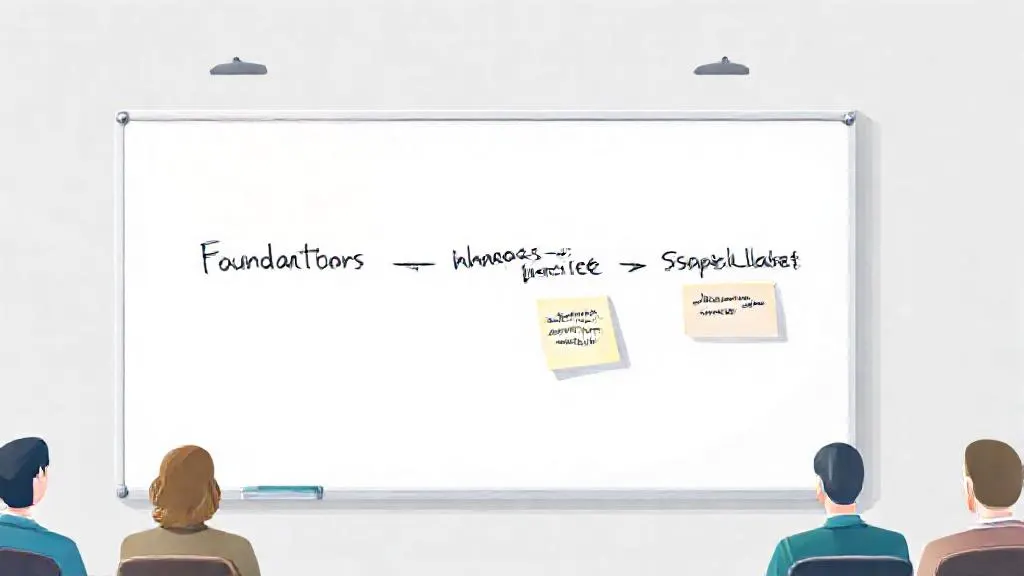
- Phase 1: Foundations. Start with a broad, non-technical course to understand the landscape. Entries 1 or 3 fit here. They give you the language to describe what generative AI can do and where it might apply in your team.
- Phase 2: Hands-on practice. Next, apply what you know directly to your work. Entry 2 builds a path around your own goal, like cleaning data or drafting reports. Entry 6 is a good alternative if you prefer a fixed curriculum of engineering projects.
- Phase 3: Specialisation. Once you are applying AI regularly, a specialised course can deepen your technical capability. Entry 5 covers agentic workflows and RAG in depth. Entry 7 is the choice if you are moving into a full-time machine learning engineering role.
Where generative AI fits in a data analyst's work
Generative AI is becoming a practical tool in several parts of a data analyst's week, but it is not a replacement for professional judgement. All AI output must be reviewed for accuracy, bias, and compliance with your organisation’s data governance policies before it is shared or acted upon.

Data cleaning and preparation. You can use AI to suggest transformations or spot anomalies in a raw dataset. For example, a data analyst might ask an AI tool to flag inconsistent date formats in a customer dataset and propose a standardisation script. The analyst would then verify the suggestions against a sample of records before applying them.
Query writing and debugging. Describing a desired output in plain language and having an AI draft the SQL can save time. For example, an analyst could write, “Give me a query to find the top five products by revenue for each region this quarter, excluding returns,” and then review the generated joins and window functions for correctness and performance.
Reporting and visualisation. AI can help with the first draft of a summary or suggest a chart type. For example, an analyst might feed a summary table into an AI tool and ask for a three-bullet plain-language summary of the key trend to include in a stakeholder email, then edit the tone and check the numbers before sending.
How to decide where to start
Pick one course that matches your immediate work need and your available time. If you are just curious, a short, free option like entry 1 or 3 will tell you whether the technology is worth a deeper investment. If you have a specific problem to solve—like a recurring data-cleaning headache—a personalised approach like Upskili’s use generative AI to speed up data cleaning and reporting path lets you start with your own goal, not a syllabus designed for thousands of people. Once you have a foundation, a more technical programme can help you specialise.
Frequently asked questions
Will generative AI replace data analysts?
Generative AI automates parts of the job—like writing boilerplate SQL or suggesting data-cleaning steps—but it does not replace the need for a human to define the right question, validate the output, and understand the business context. A data analyst's judgement is still essential to spot errors, catch bias, and explain what the numbers actually mean for a decision. The role is shifting toward reviewing and steering AI output, not disappearing.
Do I need to know Python to take a generative AI course?
Not for all of them. Courses like 'Generative AI for Everyone' and the University of Maryland's free certificate require no coding. However, to apply generative AI for tasks like building scripts or automating workflows, some Python knowledge is helpful and is expected by technical courses like Udacity's nanodegree and the Google Cloud path.
Which course gives the most recognised certificate for a data analyst's CV?
A Certificate of Completion from Johns Hopkins University carries the weight of a known institution and includes CEUs, which can be valuable for professional development records. For a free option, the certificate from the University of Maryland's business school is a solid, no-cost credential to list.
How can I use generative AI for data cleaning if my data is confidential?
You must follow your organisation's data governance and security policies. Many tools allow you to work within a private instance or sandbox where data is not used for training. Always check with your IT and compliance teams before submitting any sensitive or personally identifiable information to a third-party AI tool.
What is the difference between a course on prompt engineering and one on building RAG systems?
A prompt engineering course teaches you how to write effective instructions to get better output from a model for tasks like summarising a report or drafting a query. A course on RAG (Retrieval-Augmented Generation) is more technical; it teaches you how to connect a model to your own database of documents so it can answer questions using your company's specific data, not just its general training data.
Are these courses enough to become an AI engineer?
No. These courses teach you to use and apply generative AI tools, which is a different skill set from building and training the models themselves. The more technical courses here, like those from Udacity and Google Cloud, are a good step toward engineering roles, but they are a starting point, not a complete replacement for deeper study in machine learning and software engineering.
Is it worth paying for a course when there are free resources available?
It depends on your goal. Free resources are excellent for building awareness and testing your interest. A paid, structured course or a personalised learning path can be worth the cost if it saves you time, provides hands-on projects with feedback, or offers a credential that your employer values. The key is to match the format to how you learn best and what you need to show for it.
Turn this into a plan for you
Tell Upskili what you want to be able to do. It works out the skills involved, starts from what you already know, and teaches them in order, adjusting as you go.
Start with your goalSources
- Advanced: Generative AI for Developers, Google Cloud
- Applied Generative AI and Agentic AI, Johns Hopkins University
- Free Online Certificate in Artificial Intelligence and Career Empowerment, Robert H. Smith School of Business, University of Maryland
- Generative AI for Everyone, DeepLearning.AI
- Applied Generative AI Engineering, Udacity
- Explore the business value of generative AI solutions, Microsoft Learn