7 Best Generative AI Courses for Customer Success Professionals in 2026
By Samuel G · · 10 min read
If you manage a book of business, your week is full of writing: onboarding plans, account health summaries, QBR decks, renewal emails and escalation updates. The best generative AI courses customer success professionals can take teach you to draft those documents faster, not to build models. This guide compares seven of them, from a quick code-free start to a university certificate.
Quick comparison
| Course | Provider | Best for | Level | Duration | Certificate | Cost |
|---|---|---|---|---|---|---|
| Generative AI for Everyone | DeepLearning.AI | A fast, code-free introduction | Beginner | 5h1m | Earn a certificate with PRO | Check the provider's current pricing |
| Personalised learning path | Upskili (publisher of this guide) | Learning built around your own CS goal | Not stated | Not stated | Not stated | Free to approximately $20, depending on AI token/credit usage |
| Free Online Certificate in Artificial Intelligence and Career Empowerment | Robert H. Smith School of Business, University of Maryland | A free, business-focused certificate | Not stated | Not stated | Free certificate | Free |
| Explore the business value of generative AI solutions | Microsoft Learn | Business leaders identifying high-value AI opportunities | Not stated | Not stated | Not stated | Check the provider's current pricing |
| Applied Generative AI and Agentic AI | Johns Hopkins University | Technology and data professionals wanting a university certificate | Not stated | 16 Weeks Online | Certificate of Completion; 11 CEUs | Check the provider's current pricing |
| Applied Generative AI Engineering | Udacity | Developers building and deploying gen AI solutions | Intermediate | 56 hours | Program Certificates | Subscription · Monthly |
| Advanced: Generative AI for Developers | Google Cloud (Google Skills) | App Developers, ML Engineers and Data Scientists | Advanced | Not stated | Not stated | Check the provider's current pricing |
How we chose these courses
We looked for courses a working customer success professional could start without a technical background and finish with something they can use the next day. Each course was checked against five criteria:
- Relevance to daily CS tasks. The course content connects to onboarding plans, QBR narratives, churn-risk summaries, renewal outreach and support follow-ups — the documents a CSM actually writes.
- No unnecessary prerequisites. You can begin without a coding or data science background. Where a course is technical, that is stated clearly.
- Hands-on practice. The course offers opportunities to apply prompts and workflows to realistic business documents and decisions, not just watch videos.
- Clear cost. Free, low-cost or subscription pricing is stated where the provider gives it. Otherwise we say to check current pricing.
- Recognised certificate where it matters. For professionals who need proof of learning, we noted provider-issued certificates and CEUs.
The list runs from the most accessible starting point to the most specialised. Course details come from each provider's own page, checked on 2026-10-04. We did not take the courses ourselves.
The 7 best generative AI courses for customer success professionals, one by one
1. Generative AI for Everyone (DeepLearning.AI)
Best for: A CSM who wants a quick, code-free grounding in what generative AI is and where it helps.
This beginner course by Andrew Ng explains how generative AI works, the tools available and its impact on business and society. It requires no coding or prior AI knowledge, making it a practical first step for someone who needs to understand the technology before applying it to customer success tasks.
What you'll learn:
- How generative AI works at a conceptual level
- Common tools and their real-world uses
- The impact of generative AI on business and society
Worth knowing: The course is broad and does not cover customer-success-specific workflows. You will need to connect the concepts to your own tasks yourself.
Cost and certificate: Check the provider's current pricing. Earn a certificate with PRO.
2. Upskili: a personalised path for your goal
Best for: A CSM who wants a learning path built around their own goal, background and current skill level, not a fixed syllabus.
Upskili, the platform that publishes this guide, builds a personalised learning path from the goal you state, then adapts it as you learn. You say what you want to achieve; the platform works out the skills required and teaches them in order, measuring progress by demonstrated capability. It is especially relevant if you want the training fitted to your specific customer success work rather than a course written for a broad audience.
Here is the path Upskili generated for the goal "use generative AI to speed up customer success tasks":
- Get Started with Generative AI for Customer Success: Explain what generative AI is and identify which CS tasks it can speed up.
- What Generative AI Can Do for Customer Success
- Choose Your AI Tool
- Set Up Your AI Workspace
- Draft Customer Communications with AI: Produce clear, personalised emails, responses and updates.
- Summarize and Analyze Customer Data with AI: Digest feedback, meeting notes and account histories into actionable summaries.
- Automate Routine Customer Success Workflows: Set up simple automations for repetitive tasks.
Every learner's path differs. This is an example, not a promise of what yours will look like.
Plan a personalised route into customer success AI
What you'll learn:
- Which customer success tasks generative AI can speed up
- How to draft customer communications with AI assistance
- How to summarise account activity and feedback into briefs
- How to automate routine CS workflows
Worth knowing: Upskili is not a fixed, pre-written course. It builds your path around your stated goal, so the experience depends on what you bring to it.
Cost and certificate: Free to approximately $20, depending on AI token/credit usage. Certificate: Not stated.
3. Free Online Certificate in Artificial Intelligence and Career Empowerment (University of Maryland)
Best for: An early to mid-career CSM who wants a free, business-school certificate that covers AI and career skills together.
This free online certificate from the Robert H. Smith School of Business covers an overview of artificial intelligence, how it transforms business functional areas, and career empowerment topics such as job searching and consulting. It is designed for early to mid-career professionals and sits comfortably alongside a customer success role.
Free Online Certificate in Artificial Intelligence and Career Empowerment
What you'll learn:
- An overview of artificial intelligence
- How AI transforms business functional areas
- Career empowerment topics including job searching and consulting
Worth knowing: The course is broad and does not drill into customer-success-specific applications. You will need to apply the business-function insights to your own book of business.
Cost and certificate: Free. Free certificate in "Artificial Intelligence and Career Empowerment" from the Robert H. Smith School of Business at the University of Maryland.
4. Explore the business value of generative AI solutions (Microsoft Learn)
Best for: A CS leader or senior CSM who needs to identify high-value AI opportunities and build a case for adoption.
This Microsoft Learn learning path is built for business leaders. It covers identifying high-value generative AI opportunities, assessing readiness and implementing responsible AI solutions. Topics include generative AI concepts, Microsoft Copilot, Azure AI and intelligent agents.
Explore the business value of generative AI solutions
What you'll learn:
- How to identify high-value generative AI opportunities
- How to assess organisational readiness
- How to implement responsible AI solutions
- Generative AI concepts and Microsoft Copilot
Worth knowing: The content is framed around the Microsoft ecosystem. If your organisation uses different tools, some examples may need translation.
Cost and certificate: Check the provider's current pricing. Certificate: Not stated.
5. Applied Generative AI and Agentic AI (Johns Hopkins University)
Best for: A CS professional moving into operations or automation who wants a rigorous, university-issued certificate.
This 16-week online certificate program covers LLMs, RAG, prompt engineering, fine-tuning, agentic workflows and responsible AI through hands-on projects. It is designed for technology professionals and data professionals. A CSM who wants to build AI-assisted support workflows or internal tools will find it directly applicable.
Applied Generative AI and Agentic AI
What you'll learn:
- Large language models and retrieval-augmented generation
- Prompt engineering and fine-tuning
- Agentic workflows
- Responsible AI practices
Worth knowing: This is a substantial time commitment at 16 weeks. It assumes a level of technical comfort that may be a stretch for CSMs without a data or engineering background.
Cost and certificate: Check the provider's current pricing. Certificate of Completion from Johns Hopkins University; 11 CEUs.
6. Applied Generative AI Engineering (Udacity)
Best for: A CS professional who wants to build and deploy custom generative AI solutions, not just use existing tools.
This intermediate nanodegree program covers model selection, prompt engineering, PEFT, RAG systems, vector databases and multimodal applications. It is aimed at developers. For a CSM who has moved into a technical operations role or who works closely with a product team, it provides the skills to build AI tools that serve the customer success function.
Applied Generative AI Engineering
What you'll learn:
- Model selection and prompt engineering
- Parameter-efficient fine-tuning (PEFT)
- RAG systems and vector databases
- Multimodal applications
Worth knowing: This is a developer-focused program. If you are not comfortable writing code, start with an earlier entry on the list first.
Cost and certificate: Subscription · Monthly. Program Certificates.
7. Advanced: Generative AI for Developers (Google Cloud)
Best for: A CS operations specialist or engineer building AI features into the customer success tech stack.
This technical learning path from Google Skills includes 12 activities built for App Developers, Machine Learning Engineers and Data Scientists. It recommends completing the Introduction to Generative AI learning path first.
Advanced: Generative AI for Developers
What you'll learn:
- Advanced generative AI techniques for developers
- Practical application through 12 activities
- Skills designed for App Developers, ML Engineers and Data Scientists
Worth knowing: This is the most technical entry on the list. It is not suitable for a CSM whose primary work is relationship management and communication.
Cost and certificate: Check the provider's current pricing. Certificate: Not stated.
Which course should you start with?
Match your situation to an entry. There is no single best course, only the one that fits where you are now.
- New to generative AI: Start with entry 1 (Generative AI for Everyone) for a fast, code-free foundation, or entry 3 (University of Maryland) if you want a free certificate alongside the learning.
- Short on time: Entry 1 takes about five hours self-paced. Entry 4 (Microsoft Learn) is another focused option you can complete in short sessions.
- Need a certificate: Entry 5 (Johns Hopkins) carries a university certificate and CEUs. Entry 3 (University of Maryland) offers a free certificate from a respected business school.
- Want to practise on your own CS work: Entry 4 (Microsoft Learn) helps you spot AI opportunities in your own organisation. Entry 6 (Udacity) gives you the skills to build solutions if you are comfortable coding.
- Want a personalised route: Upskili starts from your own goal and builds the path around it.
A learning path for customer success professionals
You do not need to take every course. Most CSMs will move through two or three phases.
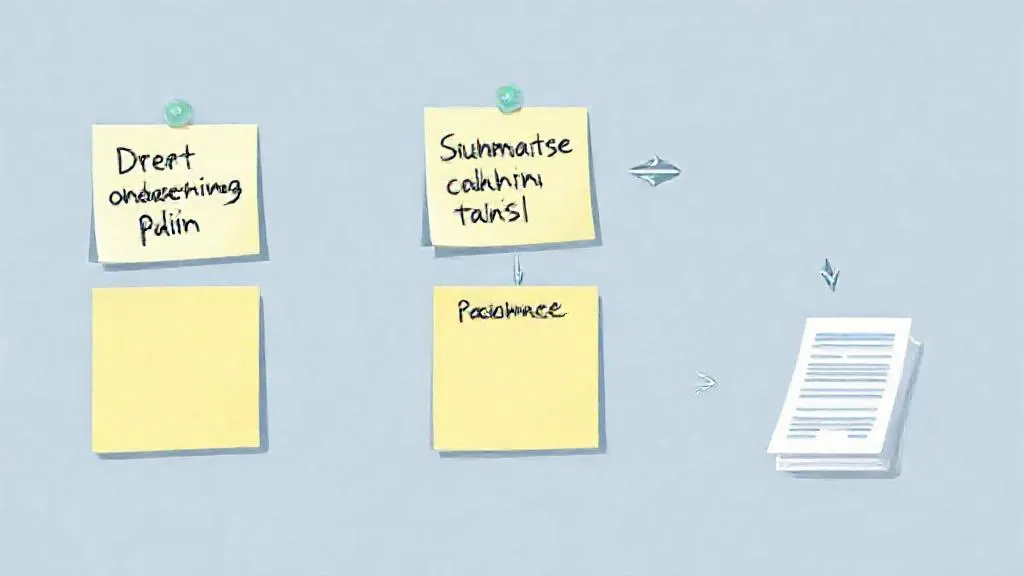
Phase 1 — Foundations. Start with entry 1 (Generative AI for Everyone) or entry 3 (University of Maryland). Both give you the concepts without requiring code. You will finish with a clear picture of what generative AI can and cannot do in a customer success context.
Phase 2 — Hands-on practice with your own tasks. Move to entry 4 (Microsoft Learn) to learn how to identify and assess AI opportunities using your own accounts, QBR decks and churn-risk data. If you are ready to build tools, entry 6 (Udacity) teaches you to create RAG systems and custom prompts that work on your company's data.
Phase 3 — Specialisation. If you shift into CS operations, automation or AI-assisted support workflows, entry 5 (Johns Hopkins) or entry 7 (Google Cloud) will deepen your technical capability. These are substantial commitments and assume you have already mastered the foundations.
Where generative AI fits in customer success work
Generative AI is not one tool for one task. It shows up across the CS workflow, always with a human reviewing the output.

Onboarding and success planning. After a discovery call, you have notes on the customer's goals, stakeholders and success criteria. A generative AI tool can turn those notes into a structured draft onboarding plan and a set of measurable success milestones. You review the draft against your own understanding of the account before sharing it.
Account health and churn-risk summaries. For example, a customer success manager preparing for an internal account review opens their usage notes, recent support tickets and NPS responses. They use a generative AI tool to draft a one-page account health summary and a suggested risk-mitigation plan, then edit the draft against their own knowledge of the customer before discussing it with their team.
QBR and renewal preparation. You have a quarter's worth of meeting notes, product usage data and expansion signals. The AI drafts a QBR narrative and a renewal outreach email. You adjust the tone, add account-specific context and remove anything that overpromises.
Support follow-ups and help content. A resolved ticket contains useful troubleshooting steps. The AI converts it into a help-centre article draft or a follow-up email to the customer. You check for accuracy and brand voice before publishing or sending.
AI output that touches customer commitments, pricing, legal terms or contractual language must be reviewed by a qualified professional. Generative AI speeds up drafting. It does not replace your judgement or sign-off.
How to decide where to start
Pick the course that matches your immediate need. If you want a quick, practical start, go with entry 1. If a certificate matters for your next role, look at entry 3 or entry 5. If you learn best when the training adapts to you, try Upskili, the platform that publishes this guide — state your goal and let it build the path. Check the provider's current pricing and certificate details before you enrol, and pick one task from your real work to practise on from day one.
Frequently asked questions
Will generative AI replace customer success managers?
No. Generative AI can draft emails, summarise notes and suggest talking points, but it cannot read a room, build trust over months or negotiate a renewal with a frustrated champion. The relationship-building, strategic judgement and commercial instinct of a skilled CSM remain essential. The role is shifting toward higher-value work, not disappearing.
Do I need to know how to code to use generative AI in customer success?
Not for most daily CS tasks. Several courses on this list require no coding, including Generative AI for Everyone and the University of Maryland certificate. If you later want to build automated workflows or custom tools, a course like Applied Generative AI Engineering will help, but it is not the starting point for most CSMs.
Can I use generative AI to write customer-facing emails without risking the relationship?
You can use it to draft, but you must review every word. AI can miss tone, get facts wrong or make promises your product does not keep. A safe workflow is to have the tool produce a draft from your bullet points, then edit it against your knowledge of the customer before sending. Never send AI-generated content unreviewed.
Is a certificate worth it for a customer success career?
It depends on your situation. If you are job hunting or making a case for a promotion, a university-issued certificate like the one from Johns Hopkins or the University of Maryland can signal commitment. If you just need to get faster at your current job, a shorter, non-certificate course may be enough.
How do I convince my manager to pay for a generative AI course?
Tie the request to a specific, recurring task that costs time — like preparing QBR decks or summarising account health for internal reviews. Estimate the hours saved each month and propose a low-cost or free course first to prove the value. Many managers will approve a small investment once they see a concrete use case.
What is the difference between this article and the one for customer service professionals?
Customer service focuses on resolving tickets and handling inbound queries, often at volume. Customer success is proactive: onboarding, adoption, expansion and renewal. This article picks courses that map to the longer-form, relationship-driven work of a CSM rather than the real-time, scripted interactions of a support agent.
Are there privacy risks in pasting customer data into a generative AI tool?
Yes. Never paste personally identifiable information, account financials or confidential meeting notes into a public or consumer-grade tool unless your organisation has approved it and has a data-processing agreement in place. Check your company's AI usage policy before you start. Many enterprise tools now offer private instances, but you must confirm that with your IT team.
How quickly can I start using generative AI in my CS work after taking a course?
With a beginner course like Generative AI for Everyone, you can start experimenting with drafting and summarising tasks the same week. The key is to pick one repetitive task, create a simple prompt template and iterate on the output. Real confidence comes after a few weeks of daily use and review.
Turn this into a plan for you
Tell Upskili what you want to be able to do. It works out the skills involved, starts from what you already know, and teaches them in order, adjusting as you go.
Start with your goalSources
- Generative AI for Everyone, DeepLearning.AI
- Free Online Certificate in Artificial Intelligence and Career Empowerment, Robert H. Smith School of Business, University of Maryland
- Explore the business value of generative AI solutions, Microsoft Learn
- Applied Generative AI and Agentic AI, Johns Hopkins University
- Applied Generative AI Engineering, Udacity