7 Best Generative AI Courses for Construction Professionals in 2026
By Samuel G · · 11 min read
If you are new to AI and want a quick, free overview, start with Generative AI for Everyone by DeepLearning.AI or the free certificate from University of Maryland. If you need business-focused guidance on where AI fits in construction, try Microsoft Learn’s business value path. For technical depth to build custom tools, consider Johns Hopkins, Udacity, or Google Cloud, depending on your coding background. If you want a personalised path built around your specific construction role and goals, Upskili is an option.
Quick comparison
| Course | Provider | Best for | Level | Duration | Certificate | Cost |
|---|---|---|---|---|---|---|
| Generative AI for Everyone | DeepLearning.AI | Beginners wanting a quick overview | Beginner | 5h1m | Earn a certificate with PRO | Check the provider's current pricing. |
| Free Online Certificate in Artificial Intelligence and Career Empowerment | Robert H. Smith School of Business, University of Maryland | Early to mid-career pros wanting a free business overview | Not stated | Not stated | Free certificate from the Robert H. Smith School of Business | Free |
| Personalised learning path | Upskili (publisher of this guide) | Professionals wanting a path built around a personal goal | Not stated | Not stated | Not stated | Free to approximately $20, depending on AI token/credit usage |
| Explore the business value of generative AI solutions | Microsoft Learn | Business leaders identifying AI opportunities | Not stated | Self-paced online | Not stated | Check the provider's current pricing. |
| Applied Generative AI and Agentic AI | Johns Hopkins University | Tech professionals wanting a university certificate | Not stated | 16 Weeks Online | Certificate of Completion from Johns Hopkins University; 11 CEUs | Check the provider's current pricing. |
| Applied Generative AI Engineering | Udacity | Developers building and deploying AI solutions | Intermediate | 56 hours | Program Certificates | Subscription · Monthly |
| Advanced: Generative AI for Developers | Google Cloud (Google Skills) | App Developers, ML Engineers, Data Scientists | Advanced | Not stated | Not stated | Check the provider's current pricing. |
How we chose these courses
We selected courses against criteria that matter for a construction professional’s daily work, not just general AI theory. Each course had to meet most of these tests:
- Relevance to construction tasks: The skills taught can be applied directly to drafting RFIs, reviewing submittals, preparing safety documentation, or assisting with estimating.
- Accessibility: No unnecessary prerequisites. A working project engineer or site manager should be able to start without going back to school.
- Hands-on practice: The course offers opportunities to apply skills to real or simulated scenarios, not just watch videos.
- Clear cost: The provider states its pricing transparently, or the course is free.
- Recognised certificate: Where a certificate is offered, it comes from a known institution and may support career progression.
The entries are ordered from the most accessible starting point to the most specialised. Course details come from each provider’s own page, checked on the dates given in the records. We did not take the courses ourselves.
The 7 best generative AI courses for construction professionals, one by one
1. Generative AI for Everyone (DeepLearning.AI)
Best for: A construction professional with no AI background who wants a short, clear primer.
This beginner course by Andrew Ng explains how generative AI works, what tools are available, and its impact on business and society. It requires no coding or prior AI knowledge. For a site engineer or project manager, it provides the vocabulary and concepts needed to have informed conversations about AI on the job.
What you'll learn:
- How generative AI works in plain terms
- Common tools and their real-world uses
- The impact of generative AI on business and society
Worth knowing: This is a foundational overview. It will not teach you to build AI tools or apply them to a specific construction workflow like submittal review.
Cost and certificate: Check the provider's current pricing. A certificate is available with a PRO subscription.
2. Free Online Certificate in Artificial Intelligence and Career Empowerment (University of Maryland)
Best for: An early to mid-career construction professional who wants a free, business-focused overview and a university-branded certificate.
Offered by the Robert H. Smith School of Business, this free online certificate covers an overview of Artificial Intelligence, how it transforms business functional areas, and career empowerment topics such as job searching and consulting. For a construction manager, the business transformation module is directly relevant to thinking about where AI fits in a project lifecycle.
What you'll learn:
- An overview of Artificial Intelligence
- How AI transforms different business functions
- Career empowerment topics, including how AI affects job searching and consulting
Worth knowing: The course is designed for a broad business audience, so it will not contain construction-specific examples. You will need to connect the concepts to your own work.
Cost and certificate: Free. You earn a free certificate in "Artificial Intelligence and Career Empowerment" from the Robert H. Smith School of Business at the University of Maryland.
3. Upskili: a personalised path for your goal
Best for: A construction professional who wants learning built around a specific task, like speeding up RFIs and submittals.
Upskili, the platform that publishes this guide, works differently from a traditional course. Instead of a fixed curriculum, you state a goal—for example, "use AI to speed up RFIs and submittals"—and Upskili builds a personalised, AI-powered learning path to get you there. It starts from your current skill level and adapts as you learn, measuring progress by demonstrated capability.
Here is the path Upskili generated for the goal "use AI to speed up RFIs and submittals":
Speed Up RFIs and Submittals with AI (Use AI tools to draft, review, and track RFIs and submittals faster while keeping accuracy and compliance.)
- AI-Assisted RFI and Submittal Workflow: Set up and use AI to draft, refine, and manage RFIs and submittals efficiently.
- What AI Can and Can't Do for RFIs and Submittals
- Choose and Set Up Your AI Tool
- Write Effective Prompts for RFIs
Every learner’s path is different and built around their own goal.
What you'll learn:
- A sequence of skills personalised to your stated goal
- The first stage of a typical path focuses on setting up an AI workflow and writing effective prompts for your specific documents
Worth knowing: This is not a pre-written course with a fixed syllabus. The value depends on how clearly you define your goal. It is priced based on AI token usage, not a flat fee.
Cost and certificate: Free to approximately $20, depending on AI token/credit usage. Certificate not stated.
Build your own AI learning path for RFIs and submittals
4. Explore the business value of generative AI solutions (Microsoft Learn)
Best for: A construction business leader or senior project manager who wants to identify high-value AI opportunities and plan implementation.
This learning path from Microsoft is designed for business leaders. It covers identifying where generative AI can add value, assessing organisational readiness, and implementing responsible AI solutions. For the head of a construction firm, it provides a framework for evaluating AI investments beyond the hype.
What you'll learn:
- Generative AI concepts and how to identify high-value opportunities
- How to assess your organisation’s readiness for AI
- Implementing responsible AI solutions
- An overview of Microsoft Copilot, Azure AI, and intelligent agents
Worth knowing: The content is naturally aligned with the Microsoft ecosystem. It is a strategic overview, not a hands-on technical course.
Cost and certificate: Check the provider's current pricing. The provider page does not state whether a certificate is awarded.
5. Applied Generative AI and Agentic AI (Johns Hopkins University)
Best for: A technical professional in a construction firm—like a BIM manager or VDC specialist—who wants a rigorous, university-backed certificate program.
This 16-week online program covers LLMs, RAG, prompt engineering, fine-tuning, agentic workflows, and responsible AI through hands-on projects. It is designed for technology and data professionals. For someone building a custom tool to analyse project specifications, the deep dive into RAG (Retrieval-Augmented Generation) is directly relevant.
What you'll learn:
- Working with Large Language Models (LLMs) and Retrieval-Augmented Generation (RAG)
- Prompt engineering and fine-tuning techniques
- Building agentic workflows
- Responsible AI principles through hands-on projects
Worth knowing: This is a significant time commitment and is designed for those with a professional technology background. It is not a starting point for a casual learner.
Cost and certificate: Check the provider's current pricing. You earn a Certificate of Completion from Johns Hopkins University and 11 CEUs.
6. Applied Generative AI Engineering (Udacity)
Best for: A developer or technical professional who wants to build and deploy generative AI solutions for construction use cases.
This intermediate nanodegree program focuses on building and deploying AI solutions. It covers model selection, prompt engineering, PEFT (Parameter-Efficient Fine-Tuning), RAG systems, vector databases, and multimodal applications. For a software developer at a large contractor, this provides the practical engineering skills to create a tool that queries a database of past submittals.
What you'll learn:
- Model selection and prompt engineering for applications
- Building RAG systems and working with vector databases
- Parameter-Efficient Fine-Tuning (PEFT)
- Developing multimodal AI applications
Worth knowing: This is a technical, project-based program aimed at developers. It assumes you are comfortable writing code.
Cost and certificate: The provider states the cost as "Subscription · Monthly." You earn Program Certificates upon completion.
7. Advanced: Generative AI for Developers (Google Cloud)
Best for: An experienced developer, machine learning engineer, or data scientist in a construction technology role.
This is a technical learning path with 12 activities, built for app developers, machine learning engineers, and data scientists. Google recommends completing its Introduction to Generative AI learning path first. For a data scientist at a large engineering firm, this path provides the advanced Google Cloud-specific skills for deploying AI at scale.
What you'll learn:
- A technical Generative AI learning path with 12 activities
- Advanced concepts for developers and data scientists on Google Cloud
Worth knowing: This is the most specialised course on the list. It requires a strong technical foundation and a recommended prerequisite.
Cost and certificate: Check the provider's current pricing. The provider page does not state whether a certificate is awarded.
Which course should you start with?
Your best starting point depends on your current knowledge, time, and goal.
- New to AI: Start with #1 Generative AI for Everyone or #2 the free University of Maryland certificate. Both are short, accessible, and require no technical background.
- Short on time: #1 Generative AI for Everyone takes just over 5 hours. The #4 Microsoft Learn path is also self-paced and broken into small modules.
- Need a certificate for your resume: #5 Johns Hopkins offers a university Certificate of Completion. #6 Udacity provides a Program Certificate. #2 University of Maryland is a free option with a certificate.
- Want to practise on your own construction documents immediately: #3 Upskili builds a path around your specific goal, like drafting RFIs. #6 Udacity is a good choice if you have a coding background and want to build a custom solution.
A learning path for construction professionals
You don’t need to commit to one long program right away. A phased approach often works best for busy professionals.
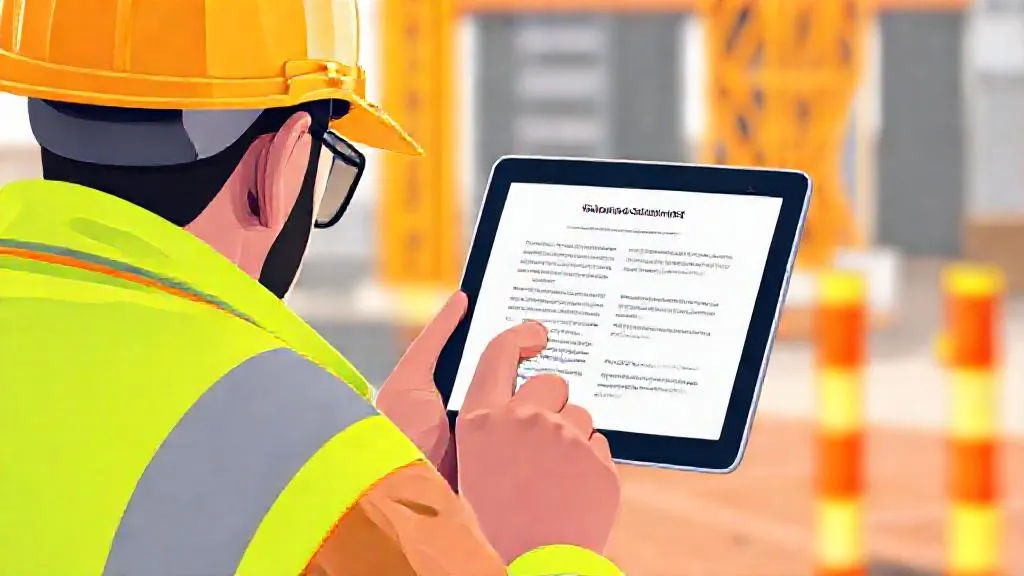
- Phase 1: Foundations. Start with a non-technical overview to understand the landscape. #1 Generative AI for Everyone or #2 the free UMD certificate will give you this footing without a major time investment.
- Phase 2: Hands-on practice with your own tasks. Next, apply the concepts to your daily work. #3 Upskili lets you build a personalised path for a specific goal like speeding up RFIs. #4 Microsoft Learn is useful here if you are in a decision-making role and evaluating AI for your team.
- Phase 3: Specialisation. If your role requires building or deploying AI tools, move to a technical program. #5 Johns Hopkins provides a broad, rigorous technical foundation. #6 Udacity is project-focused on building and deploying solutions. #7 Google Cloud is for experienced developers specialising in that ecosystem.
Where generative AI fits in construction work
Generative AI is starting to change how construction professionals handle documentation, communication, and analysis. Here are the task areas where the skills from these courses apply most directly.
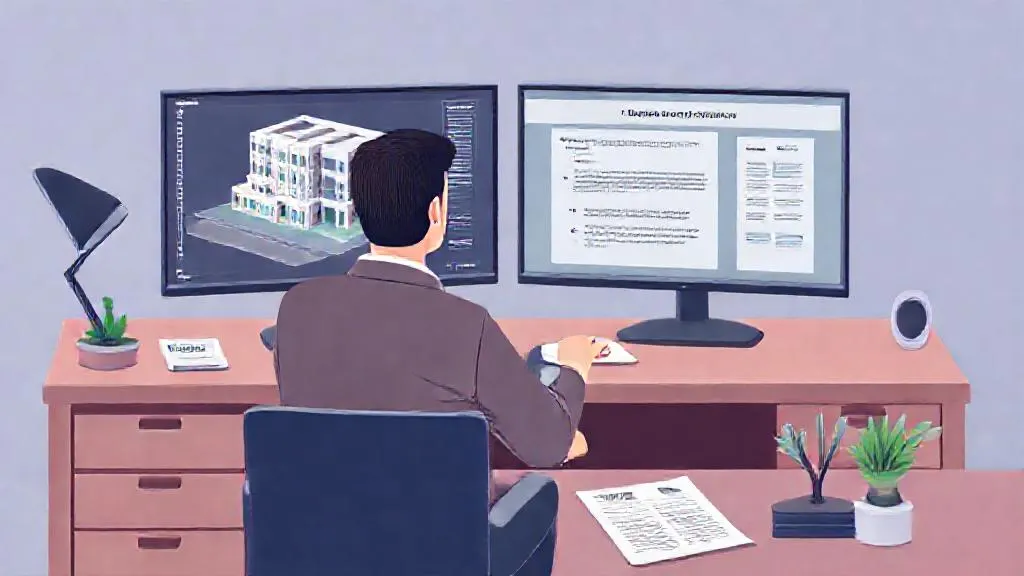
- Documentation and communication. Drafting RFIs, submittal cover sheets, and meeting minutes is a daily task. For example, a project engineer could prompt an AI tool with a specification section and a contractor’s question to generate a first draft of an RFI response, then review and edit it for accuracy.
- Safety and compliance. Creating site-specific safety plans, method statements, and toolbox talks requires pulling together standard language and project details. Suppose a site supervisor needs a toolbox talk on working at heights. They could use AI to generate a draft based on the company’s template and the specific tasks for that week, then review it before delivery.
- Estimating and bidding. AI can assist in analysing specifications and historical data to identify scope items. An estimator could use a tool to scan a new geotechnical report and highlight conditions that differ from the assumptions in the historical cost database, flagging items for manual review.
- Project planning. AI can help with the narrative parts of scheduling and resource planning. A planner might ask an AI to draft a sequence of activities for a complex foundation pour, based on the method statement, and then check the logic and durations.
An important caveat: In construction, your work is often regulated, contractually binding, or safety-critical. Any AI-generated output—whether it’s an RFI response, a safety plan, or an estimate—must be reviewed by a qualified professional. AI cannot replace your professional judgement, your responsibility to check facts, or your signature on a document.
How to decide where to start
Start by picking one task. The professional who gets the most from these courses is the one who has a specific problem in mind, like "I spend four hours a week writing RFI responses." Match that problem to a course. If you just want to know what the words mean, pick the DeepLearning.AI or UMD course. If you want to fix that specific workflow, a personalised path like Upskili’s will get you there faster. If you are planning your firm’s AI strategy, the Microsoft Learn path is the right lens. Define your goal and start a personalised learning path for construction AI
Frequently asked questions
Do I need coding skills for these generative AI courses?
Not for all of them. Courses like 'Generative AI for Everyone' and the University of Maryland's free certificate require no coding. The more technical programs from Google Cloud, Udacity, and Johns Hopkins are designed for people with some development experience. Choose based on whether you want to use AI tools or build them.
Will these courses help me with specific construction software like Procore or Bluebeam?
These courses teach foundational generative AI skills, not how to use specific construction software. However, the skills you learn—like prompt engineering and understanding AI capabilities—can be applied to any software that integrates AI features. You would then need to learn how those features work within your specific platform.
Are these courses recognised by construction employers?
Recognition varies. A certificate from a known university like Johns Hopkins or the University of Maryland may carry weight on a resume. Udacity's nanodegree and Google Cloud's skill badge are recognised in the tech industry. The most important factor for a construction employer is likely your ability to apply the skill to real project work, not the certificate itself.
How much time do I need to commit?
It ranges from a single afternoon to several months. 'Generative AI for Everyone' takes about 5 hours. The Microsoft Learn path and UMD certificate are also short. The Johns Hopkins program is 16 weeks, and the Udacity nanodegree is estimated at 56 hours of content. Choose based on your current workload and learning goals.
Can I use AI to review contract documents?
AI can assist in summarising or identifying clauses in contract documents, but it cannot provide legal advice or replace a qualified professional's review. Any AI-generated analysis of a contract, specification, or legal document must be carefully checked by a construction professional or legal counsel before it is relied upon. The professional's judgement and sign-off remain essential.
What if I have no AI background?
Start with a beginner-level course. 'Generative AI for Everyone' by DeepLearning.AI is designed for people with no prior AI knowledge. The free University of Maryland certificate also provides a broad overview suitable for early-career professionals. These will give you the vocabulary and concepts to then decide if you want to go deeper.
Are free courses enough to learn generative AI for construction?
A free course can be an excellent way to understand the fundamentals and identify high-value use cases in your work. For many professionals who want to be informed users of AI tools, this is sufficient. If your goal is to build custom AI solutions or lead a technical implementation, you will likely need a more in-depth, paid program.
Turn this into a plan for you
Tell Upskili what you want to be able to do. It works out the skills involved, starts from what you already know, and teaches them in order, adjusting as you go.
Start with your goalSources
- Advanced: Generative AI for Developers, Google Cloud
- Applied Generative AI and Agentic AI, Johns Hopkins University
- Free Online Certificate in Artificial Intelligence and Career Empowerment, Robert H. Smith School of Business, University of Maryland
- Generative AI for Everyone, DeepLearning.AI
- Applied Generative AI Engineering, Udacity
- Explore the business value of generative AI solutions, Microsoft Learn