7 Best Deep Learning Courses for Software Developers in 2026: Code, Ship & Debug
By Samuel G · · 11 min read
If you want a free, code-first start that gets you shipping models in weeks, choose Practical Deep Learning for Coders by fast.ai. If you need a structured, recognised certificate and can invest more time, the Deep Learning Specialization by DeepLearning.AI is the industry standard. If you have a specific production goal in mind—like integrating a model into your team's API—Upskili can build a personalised path directly around that outcome.
Quick comparison
| Course | Provider | Best for | Level | Duration | Certificate | Cost |
|---|---|---|---|---|---|---|
| Practical Deep Learning for Coders | fast.ai | Developers who want to build and deploy models fast | Not stated | 9 lessons, each around 90 minutes long | Not stated | Free |
| Personalised learning path | Upskili (publisher of this guide) | Developers with a specific production goal | Not stated | Not stated | Not stated | Free to approximately $20, depending on AI token/credit usage |
| Deep Learning - Computer Vision for Beginners Using PyTorch | Packt | Developers starting a career in computer vision | Intermediate | 1 week at 10 hours a week | Shareable certificate | Check the provider's current pricing. |
| Deep Learning Specialization | DeepLearning.AI | Developers who want a broad, structured foundation | Intermediate | 127h29m | Earn a certificate with PRO | Check the provider's current pricing. |
| Deep Learning | Udacity | Developers who want project-based learning with mentor support | Intermediate | 50 hours | Program Certificates | Subscription · Monthly |
| Machine Learning for Accounting with Python | University of Illinois Urbana-Champaign | Developers building software for accounting or audit use cases | Intermediate | 6 weeks at 10 hours a week | Shareable certificate | Check the provider's current pricing. |
| AI for Finance Specialization | Corporate Finance Institute | Developers in FP&A or financial services teams | Not stated | Self-Paced & 100% Online | Blockchain digital certificate | Starting from $347.90 / year |
How we chose these courses
We selected these seven options because they match how a working developer actually learns a new technical skill: by writing code, not just watching lectures. Each course meets these criteria:
- Relevance to a developer's daily work: The course involves writing, debugging, and running code. You'll open an editor, not just a video player.
- No unnecessary prerequisites: We avoided courses that demand advanced maths or prior machine learning experience unless the provider states it clearly. If you can write Python, you can start.
- Hands-on practice: Every course includes projects, notebooks, or code you execute yourself. Theory is presented to explain the code you just wrote, not the other way around.
- Clear cost and certificate: We state what the provider says about pricing and credentials. Where a certificate is an extra cost, we flag it.
- Ordered from most accessible to most specialised: The list starts with free, code-first options and moves toward domain-specific specialisations for finance and accounting software.
Course details come from each provider's own page, checked on the dates given in the records. We did not take the courses ourselves or run any independent tests.
The 7 best courses, one by one
1. Practical Deep Learning for Coders (fast.ai)
Best for: Developers who want to build and deploy working models in the shortest possible time, for free.
This is a free video course for people who already know how to code. It takes a top-down approach: you train a model in the first lesson, then gradually unpack how it works. The course covers computer vision, natural language processing, tabular data, and collaborative filtering using PyTorch and the fastai library. You'll also learn to deploy models using Hugging Face.
What you'll learn:
- Building and training models for image classification, text analysis, and tabular data
- Creating random forests and regression models as a baseline before deep learning
- Deploying models to production with a web interface
- Using PyTorch, fastai, and Hugging Face libraries
Worth knowing: The course assumes you are comfortable writing Python and debugging your own code. It does not offer a certificate, so it's less useful if your employer requires formal credentials for training budgets or promotion panels.
Cost and certificate: Free. No certificate is offered.
2. Upskili: a personalised path for your goal
Best for: Developers who have a specific production goal and want a learning path built around it, rather than a one-size-fits-all syllabus.
Upskili, the platform that publishes this guide, builds a personalised learning path around your goal, background, interests, and current skill level. You state what you want to achieve—for example, "integrate deep learning models into production software"—and it works out the skills required, teaching them in order and adapting as you progress. It is not a fixed, pre-written course. It measures progress by demonstrated capability, not time spent watching videos.
Here is the path Upskili generated for the goal "integrate deep learning models into production software":
- Get a Model You Can Actually Use: Obtain a trained deep learning model and run it locally to make predictions.
- What 'Production Integration' Really Means
- Find and Load a Pretrained Model
- Run Inference on a Sample Input
- Wrap the Model in a Web Service: Build a working HTTP API that accepts input and returns model predictions.
- Make It Reliable and Fast: Improve your API so it handles real traffic without breaking or being too slow.
- Deploy and Integrate: Put your API online and connect it to a real application.
Every learner's path differs based on their stated goal and existing knowledge.
What you'll learn:
- Loading and running inference with a pre-trained model
- Wrapping a model in a web API
- Optimising model serving for latency and reliability
- Deploying the API and connecting it to an application
Worth knowing: This is a personalised, AI-powered service, not a traditional course with a fixed curriculum. It is ideal if you have a clear outcome in mind. If you prefer a broad, survey-style overview of the entire field first, a traditional course may suit you better.
Cost and certificate: Free to approximately $20, depending on AI token/credit usage. Certificate is not stated.
3. Deep Learning - Computer Vision for Beginners Using PyTorch (Packt)
Best for: Developers who want a short, focused introduction to computer vision with PyTorch.
This Coursera course from Packt is a hands-on introduction to deep learning and computer vision. It covers tensors, neural networks, and convolutional neural networks (CNNs), walking you through the LeNet architecture. You'll also learn to use CUDA and GPU acceleration with AutoGrad in PyTorch. Basic Python knowledge is beneficial.
What you'll learn:
- Working with tensors and building neural networks in PyTorch
- Implementing CNNs and the LeNet architecture
- Using CUDA for GPU acceleration
- Applying AutoGrad for automatic differentiation
Worth knowing: The scope is narrow. It focuses specifically on computer vision and does not touch on NLP, tabular data, or deployment. Treat it as a quick on-ramp to a single subfield, not a comprehensive deep learning education.
Cost and certificate: Check the provider's current pricing. A shareable certificate is available upon completion.
4. Deep Learning Specialization (DeepLearning.AI)
Best for: Developers who want the most widely recognised certificate and a thorough, structured foundation taught by a leading figure in the field.
Taught by Andrew Ng, this five-course specialisation on Coursera is the canonical introduction to deep learning. It builds from neural network basics through CNNs, RNNs, LSTMs, and Transformers. You'll use Python and TensorFlow, and the final projects involve building and tuning models. It is the most academically structured option on this list.
What you'll learn:
- Foundations of neural networks and deep learning
- Improving deep neural networks: hyperparameter tuning, regularisation, and optimisation
- Structuring machine learning projects
- Convolutional neural networks
- Sequence models including RNNs, LSTMs, and Transformers
Worth knowing: The specialisation is long and assignment-heavy. It uses TensorFlow, not PyTorch, which may not match your team's stack. The certificate is only available with a Coursera PRO subscription, an additional cost beyond any free trial.
Cost and certificate: Check the provider's current pricing. Earn a certificate with a PRO subscription.
5. Deep Learning (Udacity)
Best for: Developers who learn best through project-based work with mentor feedback and want a credential called a Nanodegree.
Udacity's Nanodegree programme covers neural network fundamentals and architectures including CNNs, RNNs, Transformers, GANs, and diffusion models. All projects use PyTorch. The format includes code reviews from human mentors, which can be valuable when you're stuck on a tricky implementation detail.
What you'll learn:
- Neural network fundamentals
- Convolutional and recurrent neural networks
- Transformers and attention mechanisms
- Generative adversarial networks and diffusion models
- Implementing projects in PyTorch
Worth knowing: Udacity uses a monthly subscription model. The faster you finish, the less you pay, but the 50-hour estimate is tight if you plan to do the projects thoroughly while working full-time. Check the current monthly rate before enrolling.
Cost and certificate: Subscription · Monthly. Program Certificates are awarded on completion.
6. Machine Learning for Accounting with Python (University of Illinois Urbana-Champaign)
Best for: Developers building software for accountants, auditors, or finance teams who need to apply ML to business datasets.
This Coursera course from a top accounting school introduces machine learning algorithms specifically for accounting problems. It covers classification, regression, clustering, text analysis, and time series analysis, with a focus on model evaluation and optimisation. You'll work with business-related datasets in Python.
What you'll learn:
- Applying classification and regression to accounting data
- Using clustering for segmenting financial information
- Performing text analysis on financial documents
- Time series analysis for forecasting
- Model evaluation and optimisation techniques
Worth knowing: This course assumes you are comfortable with Python but does not require prior ML knowledge. It is domain-specific; if you are not working on accounting or audit software, most of the examples will feel irrelevant to your daily work.
Cost and certificate: Check the provider's current pricing. A shareable certificate is available.
7. AI for Finance Specialization (Corporate Finance Institute)
Best for: Developers embedded in FP&A teams, business intelligence, or financial services who need to automate finance workflows.
This specialisation from CFI consists of eight courses on applying AI to finance. The curriculum includes financial statement analysis, scenario planning, risk assessment, and Excel automation. It is built for financial professionals—analysts, FP&A teams, and business intelligence staff—who want to integrate AI into their existing workflows.
What you'll learn:
- Applying AI to financial statement analysis
- Using AI for scenario planning and risk assessment
- Automating Excel-based finance workflows
- Integrating AI into FP&A and business intelligence processes
Worth knowing: This is a specialisation for finance professionals first, developers second. If you are a software engineer looking to build deep learning models from scratch, this will feel light on engineering. It is strongest for developers who need to speak the language of their finance stakeholders and automate their processes.
Cost and certificate: Starting from $347.90 / year. A blockchain digital certificate is included.
Which course should you start with?
Your choice depends on your immediate priority.
- New to deep learning and want to code immediately: Start with #1, Practical Deep Learning for Coders. It is free, fast, and you'll have a working model deployed within a few lessons.
- Have a specific production goal and want a personalised path: Consider #2, Upskili. It builds a curriculum around what you actually need to ship, skipping everything else.
- Need a certificate for your CV, a promotion panel, or an employer's training budget: Choose #4, Deep Learning Specialization, or #5, Deep Learning (Udacity). Both carry recognised credentials.
- Focused specifically on computer vision: #3, Deep Learning - Computer Vision for Beginners Using PyTorch, is a short, direct on-ramp.
- Working on finance or accounting software: #6, Machine Learning for Accounting with Python, or #7, AI for Finance Specialization, will give you domain-specific skills and vocabulary that a general deep learning course will not.
A learning path for software developers
You don't need to pick just one course. A practical progression through these options looks like this:
- Foundations: Start with #1, Practical Deep Learning for Coders. Build intuition and get hands-on with PyTorch by training and deploying a model in the first few lessons. This gives you a working mental model of the whole pipeline.
- Hands-on practice with your own tasks: Next, apply what you've learned to a real problem. Use #2, Upskili, to build a personalised path around a specific production goal, like serving a model behind an API. Or, if your focus is computer vision, take #3 to deepen that specific skill.
- Specialisation: Once you have practical experience, fill in the theoretical gaps. Choose #4, Deep Learning Specialization, for a broad, structured understanding valued across the industry, or #5 for project-based depth with mentor support. If your work touches finance or accounting domains, #6 or #7 will connect deep learning directly to your users' problems.
Where deep learning fits in a software developer's work
Deep learning skills change the kind of tasks you can pick up in a sprint. Here are four areas where it shows up in a developer's week.
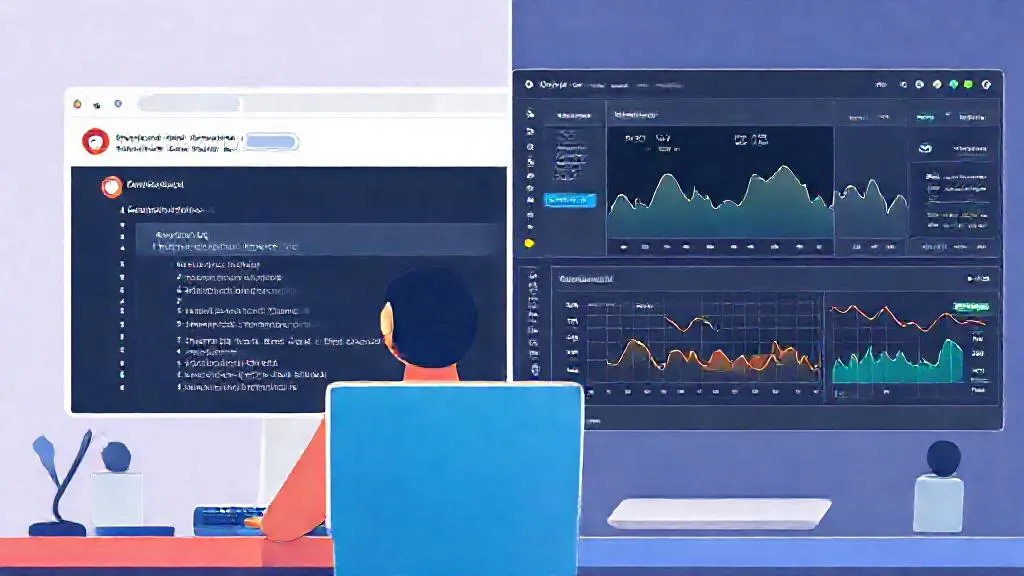
Integrating models into applications. You're not just calling a third-party API anymore; you're running a model inside your own service. For example, suppose you need to add a feature that detects whether an uploaded image contains a person. You start by reviewing the existing image upload code, then use a pre-trained model from PyTorch Hub to run inference on the server. You test it with sample images, measure the response time, and add error handling for unsupported formats. You then open a pull request for your team to review.
Debugging and improving model performance. A model that works in a notebook often falls over when it hits real traffic. You might profile a model that runs slowly on a mobile device and decide whether to quantise it or switch to a smaller architecture. This is performance engineering with a new set of tools.
Building data pipelines for ML. Models need clean, validated data. You might write a script to preprocess and validate incoming data before it reaches a training job, catching schema violations and outliers that would silently degrade model quality. This is the same data engineering you already do, applied to a new consumer.
Reviewing AI-generated code. Your team will increasingly submit pull requests that use new ML libraries or include model inference code. Reviewing that code means checking it follows team standards, doesn't introduce security risks, and handles failure modes gracefully—just like any other code, with a few new patterns to learn.
Start with your own goal
The fastest way to learn is to tie every concept to a problem you actually need to solve. If you have a clear production goal, Upskili can build a personalised path around it. Start a learning path built around your specific goal. It's free to approximately $20, depending on AI token/credit usage.
Otherwise, pick the course from the list above that matches your immediate need and start coding this week.
Frequently asked questions
Do I need a maths background to take these courses?
Not for most. Courses like fast.ai and Upskili focus on coding and practical application first, introducing maths concepts as needed. The Deep Learning Specialization requires some linear algebra familiarity, but high school maths is often enough to start. You'll pick up the necessary intuition by implementing models rather than studying theory in isolation.
Can I take these courses while working full-time?
Yes. Most are self-paced. fast.ai's lessons are 90 minutes each. The Udacity Nanodegree is 50 hours total, spread over months. Upskili adapts to your schedule. The main challenge isn't the format but the discipline to code regularly, even for 30 minutes a day.
Will a certificate help me get a job or promotion?
A certificate from a recognised provider like DeepLearning.AI or Udacity can signal commitment to a hiring manager, but it rarely clinches a decision on its own. A working project you can discuss in an interview, like a deployed model API or a pull request with performance improvements, is far more valuable. Treat the certificate as a structured forcing function to build that portfolio, not as the end goal.
What if I don't have a GPU for practice?
You can still take all of these courses. Google Colab offers free GPU access that fast.ai and other courses integrate directly. For lighter models, a modern CPU works. The constraint is more about patience than possibility. You won't train a large language model from scratch, but you can learn, fine-tune, and deploy smaller models without any local hardware cost.
Are these courses enough to become a deep learning engineer?
They are a strong start, but not the full journey. The role demands software engineering maturity—writing clean, testable code, designing systems, and operating services in production—that these courses don't teach. They will give you the deep learning-specific skills. Bridging the gap to a dedicated role requires applying those skills in a real production environment, often by transitioning within your current team first.
How do I choose between Upskili and a traditional course?
Choose Upskili if you have a specific, concrete goal in mind, like 'integrate a deep learning model into my team's Node.js backend'. It will build a path directly for that outcome. Choose a traditional course if you prefer a broad, structured overview of the field first, or if you want a shareable certificate from a university or known platform. They serve different needs.
Can I use these courses to build a portfolio?
Yes, and you should. The projects in fast.ai, the Nanodegree, and the Specialization are designed to be extended. Take a project from a course, apply it to a dataset you care about, write up the process, and host the code publicly. A repository with a clear README and a working demo is the strongest portfolio piece you can create.
What's the best free option?
Practical Deep Learning for Coders by fast.ai is the best free, comprehensive course. It covers computer vision, NLP, tabular data, and deployment. For a free, personalised path built around your own goal, Upskili is available with a free tier, with costs scaling to approximately $20 depending on AI token usage.
Turn this into a plan for you
Tell Upskili what you want to be able to do. It works out the skills involved, starts from what you already know, and teaches them in order, adjusting as you go.
Start with your goalSources
- Practical Deep Learning for Coders, fast.ai
- Deep Learning Specialization, DeepLearning.AI
- Deep Learning - Computer Vision for Beginners Using PyTorch, Packt
- Deep Learning Nanodegree, Udacity
- AI for Finance Specialization, Corporate Finance Institute