7 Best Artificial Intelligence Courses for Recruiters in 2026
By Samuel G · · 10 min read
If you are new to AI and want a short, free starting point, begin with Alison's Artificial Intelligence for Beginners or IBM's Introduction to Artificial Intelligence (AI). For a practical certificate that covers workplace AI skills, the Google AI Professional Certificate or IBM Foundations of AI are a good fit. Upskili builds a personalised path around your recruiting goal if you want learning shaped to your own tasks and level.
Quick comparison
| Course | Provider | Best for | Level | Duration | Certificate | Cost |
|---|---|---|---|---|---|---|
| Artificial Intelligence for Beginners | Alison | A free, quick introduction | Beginner | 1.5-3 Hours | CPD-Accredited | Free |
| Personalised learning path | Upskili (publisher of this guide) | A path built around your goal | Not stated | Not stated | Not stated | Free to approximately $20, depending on AI token/credit usage |
| Introduction to Artificial Intelligence (AI) | IBM | A short, shareable certificate course | Beginner | 1 week at 10 hours a week | Shareable certificate | Check the provider's current pricing. |
| Google AI Professional Certificate | Practical workplace AI skills | Beginner | Not stated | Not stated | Check the provider's current pricing. | |
| Foundations of AI | IBM | A broad AI foundation with a certificate | Not stated | 3 months | Earn a certificate | Original price: $197 USD; Discounted price: $177.30 |
| IBM AI Developer Professional Certificate | IBM | Building AI-powered apps and chatbots | Beginner | 6 months at 4 hours a week | Shareable certificate | Check the provider's current pricing. |
| Computer Science for Artificial Intelligence | HarvardX | Deep technical AI and programming knowledge | Beginner | 5 months | Earn a certificate | Original price: $518 USD; Discounted price: $466.20 |
How we chose these courses
We looked for courses that a working recruiter could apply to their daily tasks without wasting time on irrelevant theory. The criteria were:
- Relevance to recruiting tasks: Courses that cover generative AI, prompt engineering or AI fundamentals you can apply to screening CVs, writing job ads and drafting candidate communications.
- Accessible starting point: Beginner-friendly options with no unnecessary prerequisites, ordered so you can start with the simplest.
- Hands-on practice: Courses with labs, projects or activities where the provider states them, so you can practise on documents that resemble your real work.
- Clear cost: Free or stated pricing so you can decide without hidden fees.
- Certificate where it matters: Recognised certificates for those who need to show completed learning to an employer.
Details come from each provider's own page, checked on 2026-09-29. We did not take the courses ourselves. The list is ordered from the most accessible starting point to the most specialised.
The 7 best AI courses for recruiters, one by one
1. Artificial Intelligence for Beginners (Alison)
Best for: A free, no-commitment first step into AI.
This is a short online course that teaches the basics of artificial intelligence, including its history, different types of AI systems, machine learning classifications and applications across industries. It is a quick way to get comfortable with the terminology before you tackle a longer course.
What you'll learn:
- The historical development of AI.
- Types of AI systems and how they differ.
- Machine learning classifications.
- Applications of AI in various industries.
Worth knowing: The course is very short and covers broad concepts. It does not include any hands-on practice with generative AI tools you would use in recruiting.
Cost and certificate: Free, with a CPD-accredited certificate.
2. Upskili: a personalised path for your goal
Best for: A learning path that adapts to your specific goal, background and current skill level.
Upskili, the platform that publishes this guide, is not a fixed, pre-written course. You state what you want to achieve, such as using AI to speed up candidate screening and job ad writing, and it builds a personalised, AI-powered learning path around that goal. It measures your progress by demonstrated capability and adapts as you learn. It costs free to approximately $20, depending on AI token/credit usage.
What you'll learn:
- The specific AI skills required to meet your stated recruiting goal.
- How to apply those skills in order, building on what you already know.
- A path that adjusts as you demonstrate progress.
Worth knowing: This is a personalised experience, not a fixed syllabus you can preview in full before starting. It suits people who want a path built around their own work, not a general curriculum.
Cost and certificate: Free to approximately $20, depending on AI token/credit usage. Certificate not stated.
3. Introduction to Artificial Intelligence (AI) (IBM)
Best for: A short, structured introduction with a shareable certificate from a recognised tech company.
This beginner course from IBM on Coursera covers core AI concepts including deep learning, machine learning, neural networks, and generative AI models. It is designed for a broad audience and takes about a week of focused effort.
What you'll learn:
- Core AI concepts and terminology.
- What deep learning and machine learning are.
- An introduction to neural networks.
- An understanding of generative AI models.
Worth knowing: The content is general and not tailored to recruiting. You will need to work out for yourself how the concepts apply to your daily tasks like screening or sourcing.
Cost and certificate: Check the provider's current pricing. A shareable certificate is included.
4. Google AI Professional Certificate (Google)
Best for: Recruiters who want practical, hands-on experience using generative AI for common workplace tasks.
This program from Google teaches how to use generative AI for tasks such as strategy, boosting creativity, and streamlining repetitive work. It includes over 20 hands-on activities and you build a portfolio of AI projects. The focus on practical workplace application makes it a strong fit for writing job ads, drafting outreach messages and summarising information.
What you'll learn:
- How to use generative AI for workplace tasks.
- Techniques to boost creativity with AI.
- How to streamline repetitive tasks.
- Skills built through 20+ hands-on activities.
Worth knowing: The provider does not state a fixed duration, so it is worth checking the expected time commitment on their page before you enrol.
Cost and certificate: Check the provider's current pricing. Certificate details are not stated on the page.
5. Foundations of AI (IBM)
Best for: A broader professional certificate that adds machine learning and prompt engineering to your AI knowledge.
This professional certificate from IBM on edX covers AI fundamentals, machine learning, deep learning, large language models, neural networks, and prompt engineering. It includes hands-on labs with tools like ChatGPT, Copilot, and Gemini, which are directly relevant to a recruiter's daily work.
What you'll learn:
- AI and machine learning fundamentals.
- How large language models and neural networks work.
- Prompt engineering techniques.
- Hands-on practice with ChatGPT, Copilot and Gemini.
Worth knowing: The stated duration is three months, which is a bigger commitment than the shorter introductory courses. The discounted price is $177.30 at the time of checking, but this may change.
Cost and certificate: Original price: $197 USD; Discounted price: $177.30. You earn a certificate upon completion.
6. IBM AI Developer Professional Certificate (IBM)
Best for: Recruiters who want to build or customise AI-powered tools, not just use existing ones.
This professional certificate from IBM on Coursera covers software engineering, AI, generative AI, prompt engineering, HTML, JavaScript, and Python programming. It includes hands-on labs and projects where you build AI-powered chatbots and apps. This is a technical course for someone who wants to create custom sourcing or screening tools.
What you'll learn:
- Software engineering and AI principles.
- Generative AI and prompt engineering.
- HTML, JavaScript, and Python programming.
- How to build AI-powered chatbots and apps.
Worth knowing: This is a six-month commitment at four hours a week and requires learning to code. It is a significant step up in technical depth from the other courses on this list.
Cost and certificate: Check the provider's current pricing. A shareable certificate is included.
7. Computer Science for Artificial Intelligence (HarvardX)
Best for: Recruiters seeking the deepest technical foundation in AI and programming.
This professional certificate series from HarvardX on edX combines CS50's Introduction to Computer Science and CS50's Introduction to Artificial Intelligence with Python. It covers programming fundamentals, graph search algorithms, reinforcement learning, machine learning, and artificial intelligence principles. It is the most academically rigorous option on this list.
What you'll learn:
- Programming fundamentals.
- Graph search algorithms.
- Reinforcement learning and machine learning principles.
- A deep foundation in artificial intelligence principles.
Worth knowing: This five-month program is a serious academic commitment. The technical content goes well beyond what most recruiters need for daily AI use, but it is valuable if you plan to move into a technical talent acquisition or HR technology role.
Cost and certificate: Original price: $518 USD; Discounted price: $466.20. You earn a certificate upon completion.
Which course should you start with?
- New to AI and short on time: Start with 1. Artificial Intelligence for Beginners (Alison) or 3. Introduction to Artificial Intelligence (AI) (IBM). Both give you a quick grounding in the concepts.
- Need a certificate for your CV or employer: Consider 4. Google AI Professional Certificate (Google) or 5. Foundations of AI (IBM). Both come from recognised providers and result in a certificate.
- Want to practise on your own recruiting documents: 4. Google AI Professional Certificate (Google) includes hands-on activities you can apply directly to job ads, outreach and screening summaries.
- Want a path built around your own goal: 2. Upskili: a personalised path for your goal starts from what you already know and adapts as you learn.
- Ready for technical depth: 6. IBM AI Developer Professional Certificate (IBM) or 7. Computer Science for Artificial Intelligence (HarvardX) will teach you to build and customise AI tools.
A learning path for recruiters
A phased approach helps you build useful skills without getting overwhelmed.

Foundations. Begin with 1. Artificial Intelligence for Beginners (Alison) or 3. Introduction to Artificial Intelligence (AI) (IBM). Both explain the core concepts in a few hours or a week, giving you the vocabulary to understand what generative AI can and cannot do.
Hands-on practice with your own tasks. Move to 4. Google AI Professional Certificate (Google). Its hands-on activities let you apply generative AI to the documents you work with daily. For example, you might practise writing a prompt to draft a job advert for a hard-to-fill role, then refine the output.
Certificate and broader AI knowledge. If you need a recognised certificate and want to go deeper into how the models work, take 5. Foundations of AI (IBM). The labs on prompt engineering with ChatGPT, Copilot and Gemini are directly useful for drafting candidate emails and summarising interview notes.
Specialisation. This stage is optional and only for recruiters who want to build their own tools. 6. IBM AI Developer Professional Certificate (IBM) or 7. Computer Science for Artificial Intelligence (HarvardX) will teach you the programming skills to create custom AI applications, such as a chatbot that pre-screens candidates against a set of criteria.
Where AI fits in a recruiter's work
AI output must be reviewed by a qualified professional. It does not replace your judgement, professional standards or sign-off on hiring decisions. Here are four areas where it can support your work.
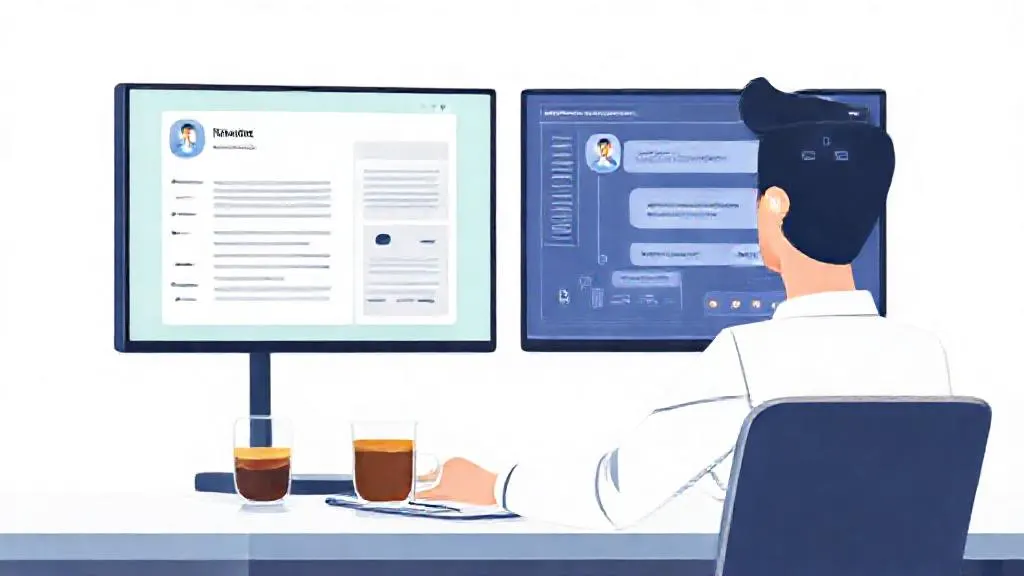
Screening and shortlisting. AI can help summarise a batch of CVs against a role brief, pulling out relevant experience and flagging gaps. For example, suppose you need to screen a batch of CVs for a customer service role. You could use a generative AI tool to summarise each CV against the job requirements, then review the summaries yourself to check for missed context or bias before deciding who to shortlist.
Job adverts and outreach. AI can draft and refine job advert text and candidate outreach messages. You remain responsible for ensuring the language is inclusive, accurate and compliant with employment law in your jurisdiction. A tool can suggest phrasing, but it cannot understand your organisation's culture or the nuances of the role.
Interview notes and feedback. AI can help you structure rough interview notes into a coherent summary. The final assessment of a candidate's suitability, and the feedback you give to a hiring manager, must be your own professional judgement. Never present an AI-generated summary as your own unaided analysis.
Pipeline reporting. AI can turn raw pipeline data into a first draft of a report. You must check every figure, add the context only you have, and ensure the narrative is accurate before sharing it with a hiring manager or leadership.
How to decide where to start
If you have no AI background, pick a free or low-cost beginner course first. If you need a certificate, choose a course that states one clearly. If you want to practise on your own recruiting documents straight away, pick a course with hands-on activities. And if you want a path shaped around your specific goal, you can plan a personalised route into AI for your recruiting work.
Frequently asked questions
Will AI replace recruiters?
It will change the job more than it replaces it. AI is good at summarising CVs, drafting job ads and scheduling, but it cannot assess cultural fit, negotiate offers, or build the trust that makes a candidate accept a role. The parts of recruiting that rely on human judgement and relationships still need a person.
Which AI course is best for a recruiter with no technical background?
Start with a short, free course like Alison's Artificial Intelligence for Beginners or IBM's Introduction to Artificial Intelligence (AI) on Coursera. Both assume no prior knowledge and teach the core concepts in a few hours. After that, the Google AI Professional Certificate is a practical next step that focuses on using AI tools for workplace tasks.
Do I need to learn to code to use AI in recruiting?
No. Most recruiting tasks that benefit from AI, such as writing job adverts, summarising CVs and drafting candidate emails, only require you to use existing generative AI tools with good prompt-writing skills. Coding becomes useful if you want to build custom screening tools or integrate AI with your ATS, which is covered by the IBM AI Developer and HarvardX courses.
Can I use AI to write inclusive job adverts?
Yes, AI can help by flagging potentially biased language and suggesting neutral alternatives. However, you must review its suggestions yourself. The tool does not understand the full context of the role or your organisation's culture, and you are responsible for the final published text and its compliance with employment law.
How do I explain my use of AI to a hiring manager?
Be direct about what the tool did and what you did. For example, say 'I used an AI tool to summarise the CVs against the job spec, then I reviewed every shortlist myself.' This shows you are using technology to be thorough, not to hand off a decision. Never present AI output as your own unaided analysis.
Is a free AI certificate worth putting on my CV?
It can be, if it signals a specific skill you have practised. A free completion certificate from a recognised provider like Google or IBM shows you have structured knowledge of AI tools. What matters more in an interview is being able to describe a real task you used AI for and how you checked the output.
What is the risk of AI bias in candidate screening?
AI models can learn historical biases present in their training data, which might lead them to unfairly favour or penalise certain groups of candidates. This is why you must never rely on an AI tool to make a selection decision. Your professional review of every shortlist is essential to catch and correct potential bias that an automated system might miss.
Turn this into a plan for you
Tell Upskili what you want to be able to do. It works out the skills involved, starts from what you already know, and teaches them in order, adjusting as you go.
Start with your goalSources
- Google AI Professional Certificate, Google
- Foundations of AI, IBM on edX
- IBM AI Developer Professional Certificate, IBM on Coursera
- Computer Science for Artificial Intelligence, HarvardX on edX
- Introduction to Artificial Intelligence (AI), IBM on Coursera
- Artificial Intelligence for Beginners, Alison